
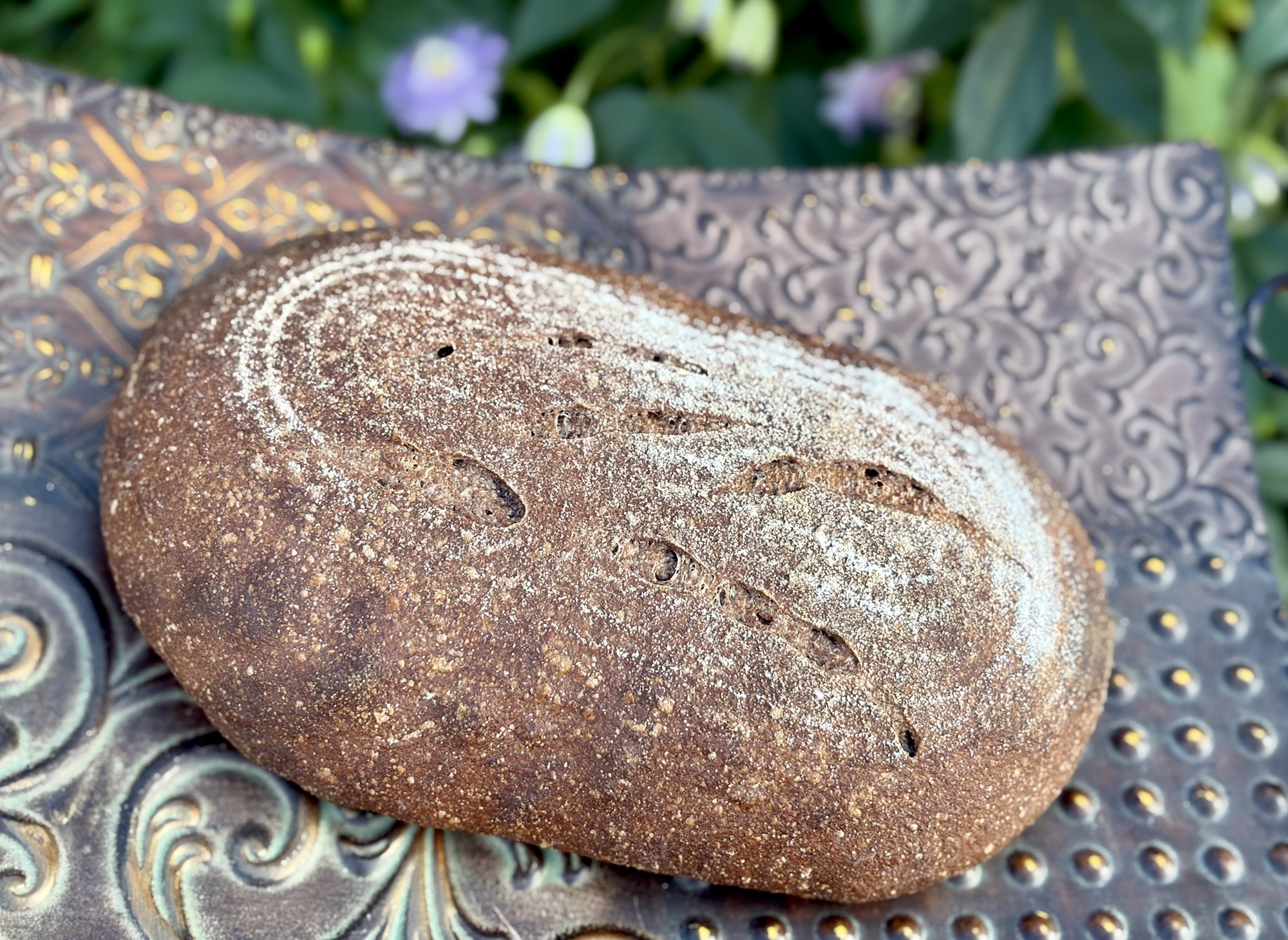
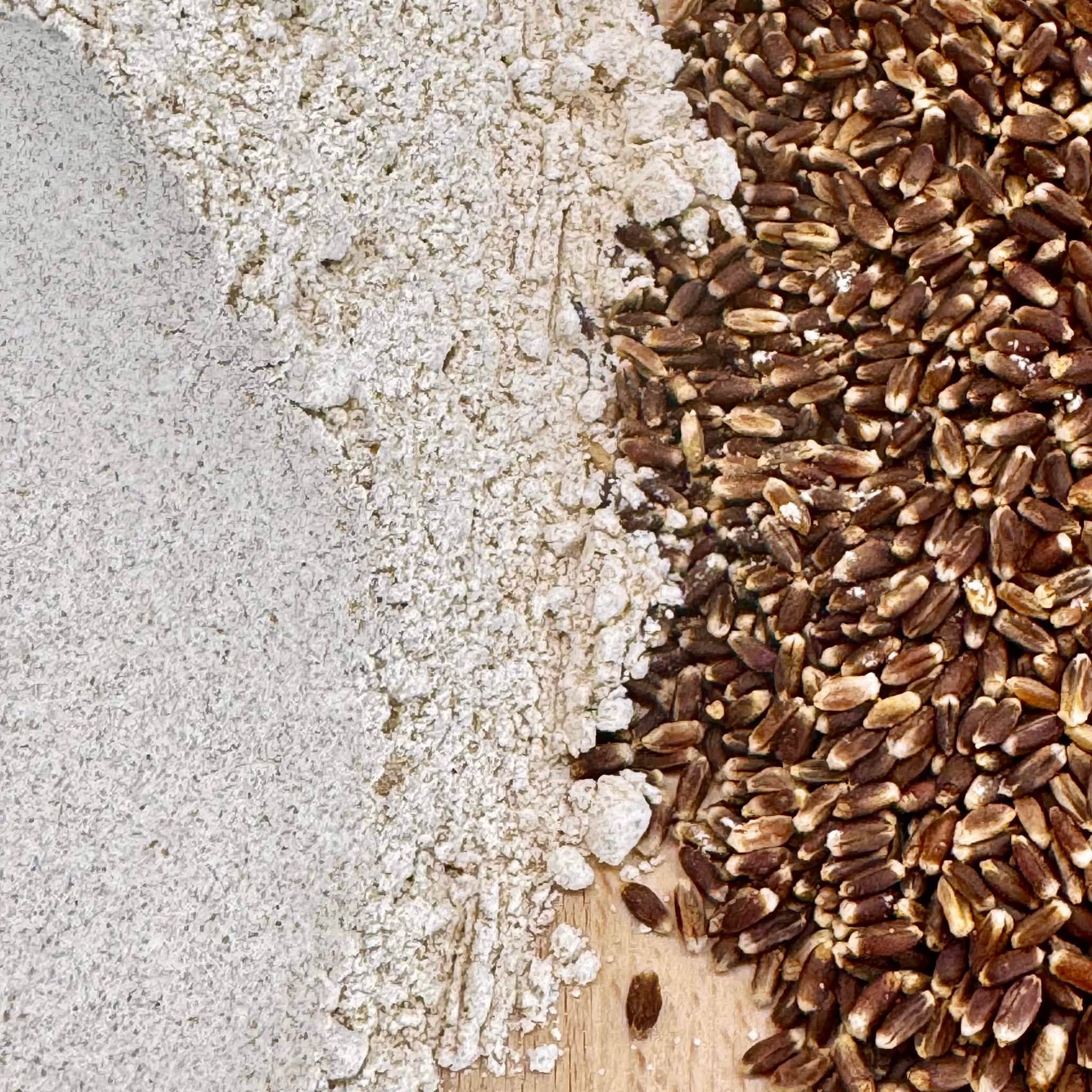
My favorite place to get fresh grains to mill, Barton Springs Mill, has partnered with Oklahoma State University’s Dr. Brett Carver and Bob Baker of 4 Generations Farm, Alva, Oklahoma, to bring you Heartwell – a modern purple wheat developed from the crossing of Big Country (a former BSM customer favorite) and Smith’s Gold. The result is a wheat with purple pericarp/bran.
Nutritional & Chemical Specs
- High Antioxidants: The signature purple color comes from high concentrations of anthocyanins (the same antioxidants found in blueberries and pomegranates). Heartwell contains at least three times the antioxidant levels of conventional hard red winter wheat.
- High Protein Content: It boasts an exceptionally high protein content of 16%, providing excellent structural potential for bread making.
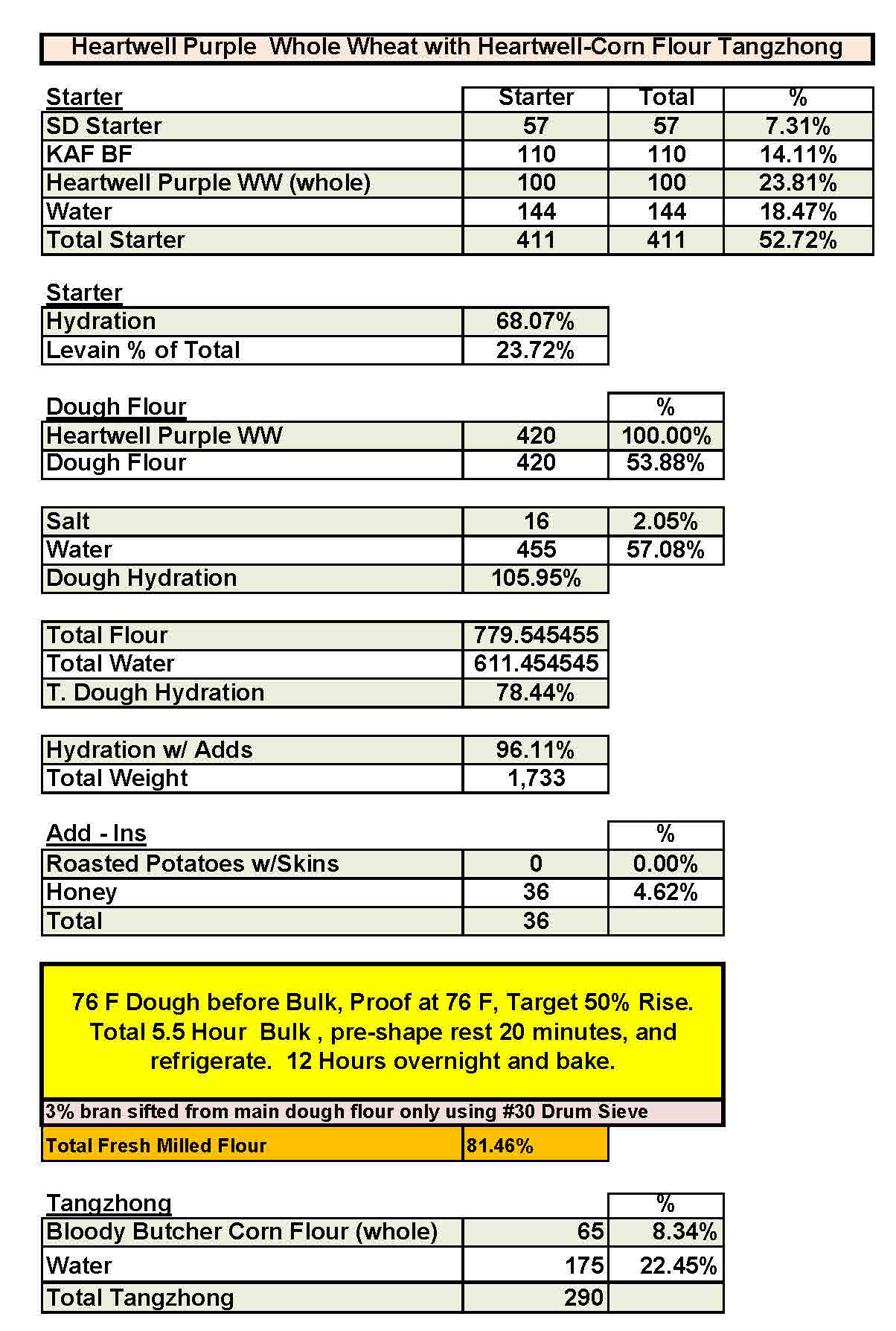
I used a little bread flour in the levain, otherwise the majority of the flour was freshly milled with my Mockmill 200.
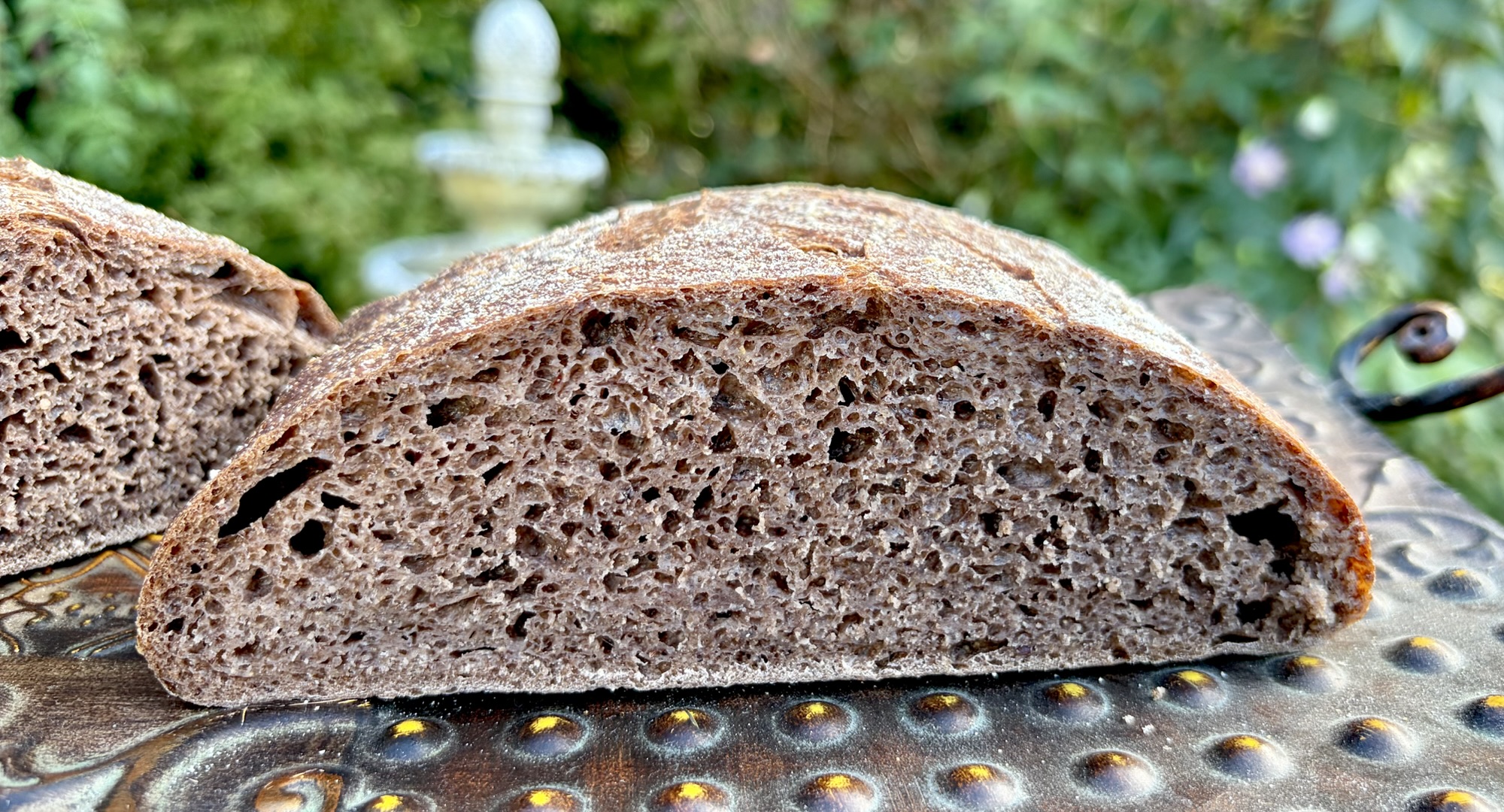
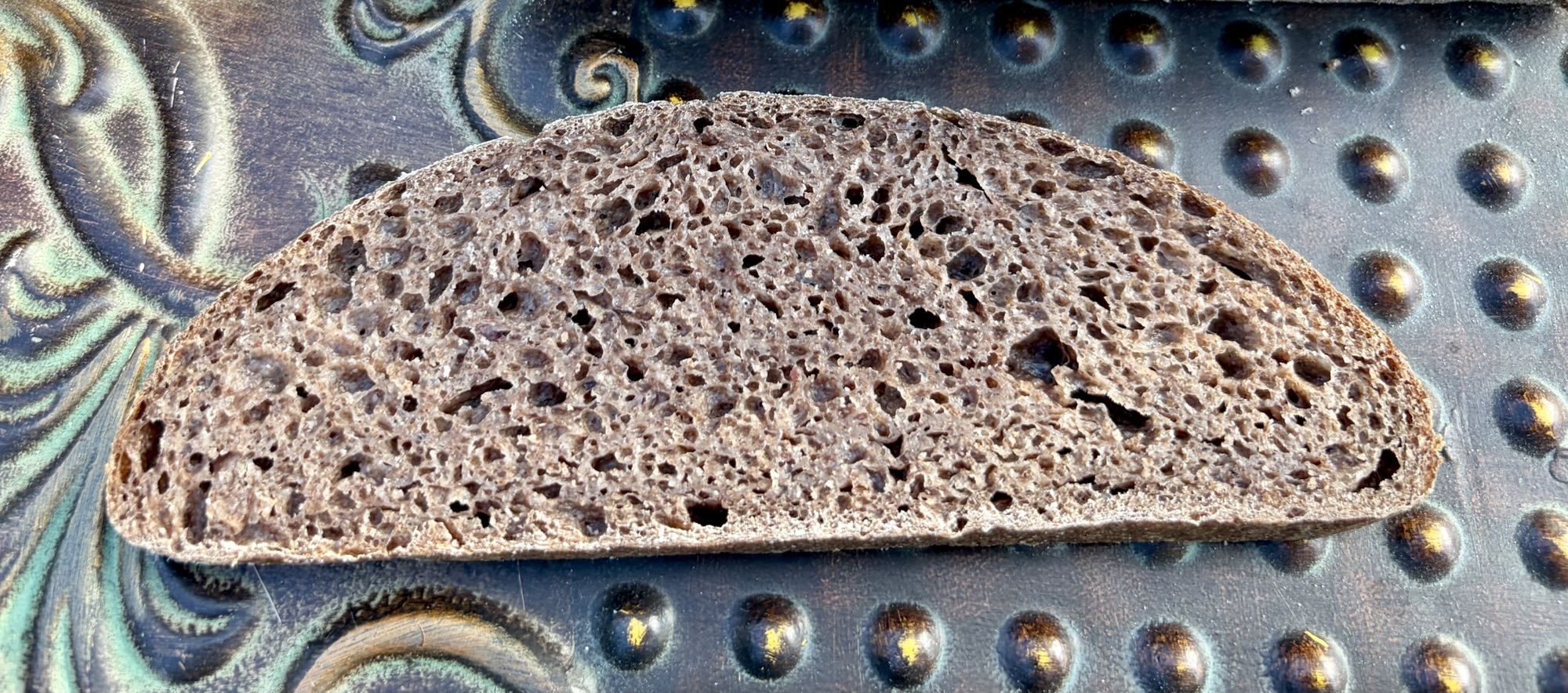
I definitely could have lowered the hydration as the dough was a little over hydrated. Overall the crumb is nice and moist and fairly open. The grain imparts a slightly sweet flavor with mild wheat overtones.
The dough temperature was 76°F, and I let it bulk proof at 76°F until it reached around 50% rise in my proofer. Total time of bulk fermentation from when the starter was added was 5.5 hours.
I mixed the dough in my Ankarsrum and open baked with steam after the dough slept overnight in the fridge.
I highly recommend you try this grain and/or flour.
Formula
Levain Directions
Mix all the levain ingredients together for about 1 minute and cover.
Let it sit at room temperature (I used my proofer set at 75°F) for around 5-7 hours or until the starter has almost doubled. I like to use the starter as soon as it has peaked.
Tangzhong Directions
Add the water to the Bloody Buther Corn flour (un-sifted) in a small saucepan and cook on medium-low until the starches gelatinize and it starts to thicken. It should be like wallpaper paste when done. Remove from the heat and cool until it’s about room temperature. I have started putting it in an ice water bath to cool it quicker, and it’s kept it’s loose consistency this way.
Main Dough Procedure
Note: I use an Ankarsrum Mixer, so my mixing order is slightly different from that of a KitchenAid or other mixer. Add all the water to your mixing bowl except for about 1/4 of the water. Add all the flour to the bowl and mix on low for 1 minute, until it forms a shaggy mass. Cover the mixing bowl and let it rest for 25 minutes. Next, add the levain, Tangzhong, honey, and most of the remaining water (as needed), and mix on medium-low speed (about speed 4) for around 15 minutes. Let it rest for another 20-25 minutes. Now add the salt and the remaining water if needed, and mix on speed 4-5 until you have a nicely developed, smooth dough. Don’t be afraid to mix longer. I have found that upfront gluten development is key if you want a nice open crumb.
Remove the dough from the bowl and place it in a lightly oiled bowl or proofing container, then do several stretch-and-folds. Make sure the dough is as flat as possible in your bowl/container, and measure the dough in millimeters and take the temperature of the dough. Based on the chart from http://www.thesourdoughjourney.com, determine what % rise you need and make a note. If you have a proofer, decide what temperature you want to set it at and what rise you are aiming for. In general, I find it ideal to shoot for a 75° F dough temperature.
The formula for adjusting your water temperature to arrive at the desired DT is as follows: multiply your target temperature by three, then subtract the room temperature, flour temperature, and the mixer friction factor.
Here is how to estimate the Friction Factor based on your mixing method and/or equipment:
- Hand mixing: 0° F to 8°F
- Stand mixer (KitchenAid/Hobart): 20°F to 35°F depending on speed and time.
- Ankarsum: 5°F to 10°F
- Spiral mixer: 8°F to 24° F
Once you calculate this with your own mixer and see what the final DT ends up with, you will easily be able to acomplish the desired dough temperature.
Do a set of coil folds after 30 minutes, and a second one 30 minutes later, and then one set of stretch and folds 30 minutes later. It’s important to build the layers of gases by doing the coil folds. Place it back in your proofing vessel to finish bulk proofing.
Once the dough reaches the desired bulk rise, pre-shape and let rest for 15-20 minutes. (Note: the % rise amount is a guide and with experience you will be able to tell when you dough has finished the initial bulk. You should see nice bubbly dough on the bottom and sides, and the dough should be jiggly). Finish shaping and place the dough in your banneton, bowl, or on a sheet pan, then cover it to keep it airtight.
When you are ready to bake, preheat your oven to 500°F an hour beforehand and prepare for steam. When ready to bake, score as desired. Prepare your oven for steam. I have a heavy-duty baking pan on the bottom rack of my oven with 1 baking stone above the pan and one on the top shelf. I pour 1 cup of boiling water into the pan right after I place the dough in the oven. I then lower the oven temperature to 450°F and bake until they are nice and brown, and the internal temperature is at least 205 – 210°F.
Take the bread(s) out of the oven when done and let them (it), cool on a baker’s rack for as long as you can resist.

 mookielovesbread