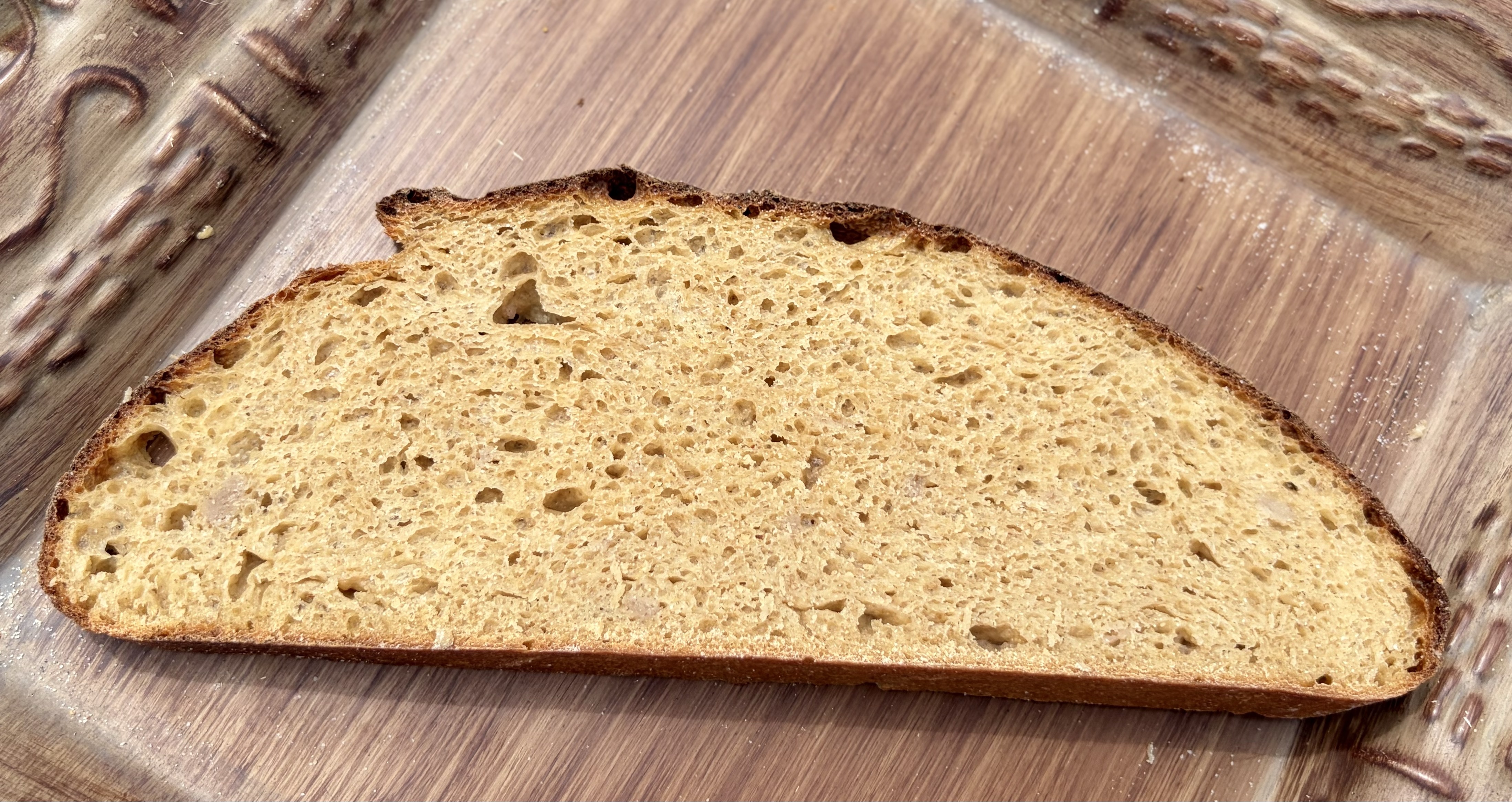
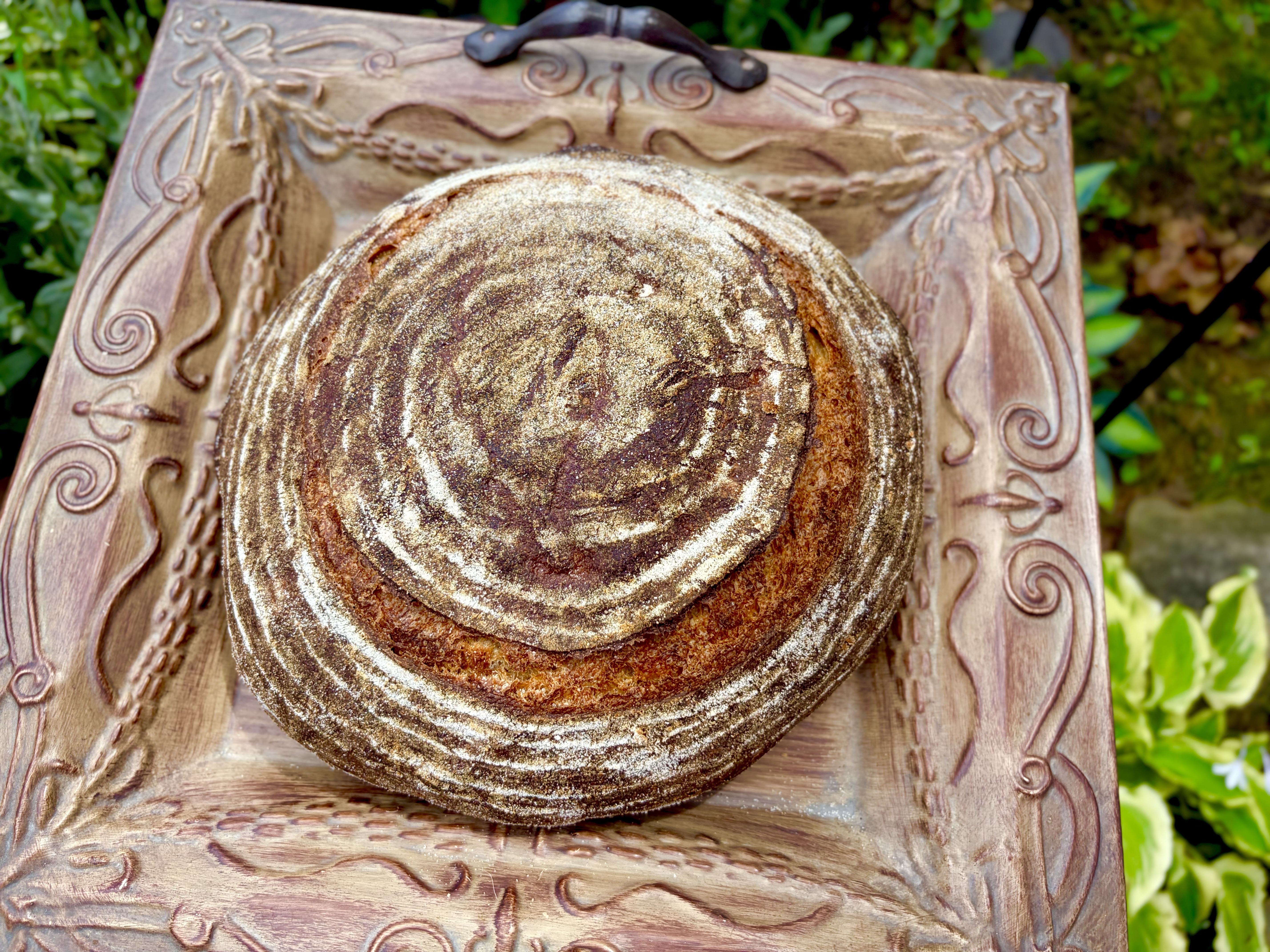
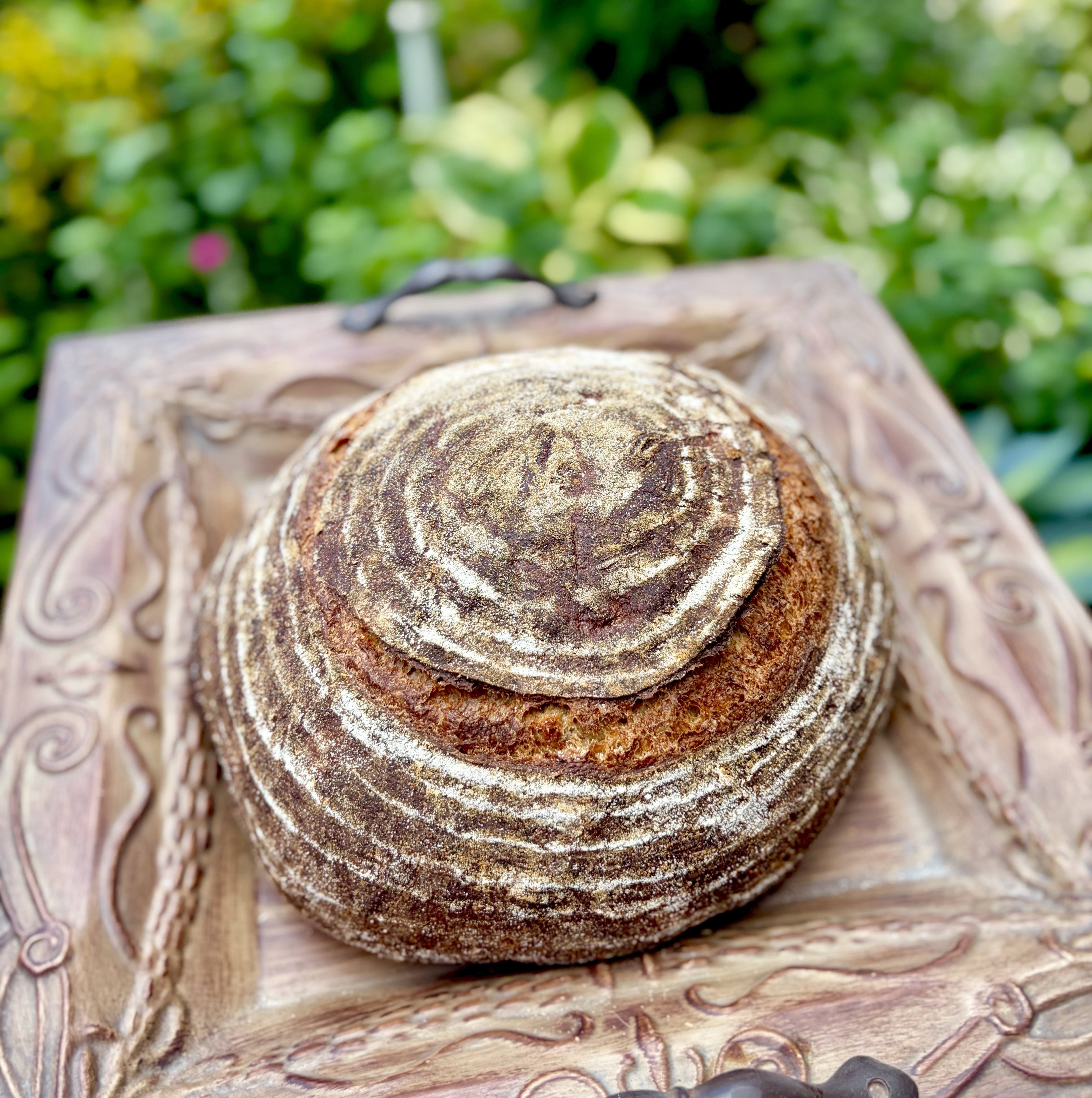
I was very happy with how this one turned out. This bake was made with 83% fresh milled flour, mixed in my Ankarsrum and open baked with steam.
The FMF was sifted through a #30 drum sieve, and about 3% of the bran was removed. The barley for the scald was not sifted.
The crumb was fairly open. This is a wet dough when you calculate the water content of the eggs and the scald.
This bread tasted like a Challah on steroids. It’s worth trying.
Formula
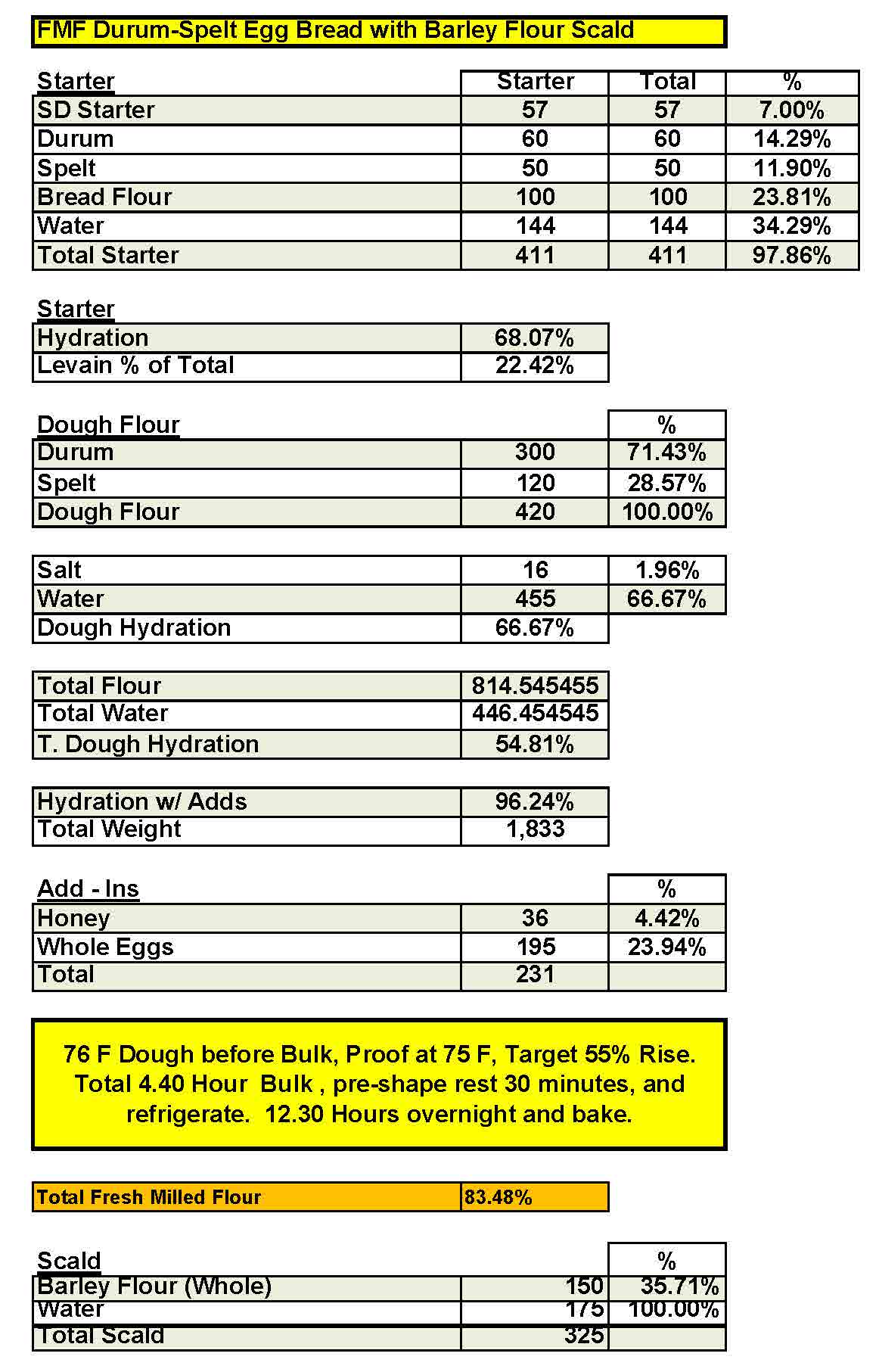
Levain Directions
Mix all the levain ingredients together for about 1 minute and cover with plastic wrap.
Let it sit at room temperature for around 6-7 hours or until the starter has almost doubled. Either use in the main dough immediately or refrigerate for a few hours before using.
Scald Directions
Pour boiling water over the ingredients and mix until incorporated. Cover and let cool to room temperature. I put mine in the refrigerator to let it cool quicker.
Main Dough Procedure
Note: I use an Ankarsrum Mixer, so my order of mixing is slightly different from that of using a KitchenAid or other mixer. Add all the water to your mixing bowl except the 70 grams of water. Add all your flour to the bowl and mix on low for a minute until it forms a shaggy mass. Cover the mixing bowl and let it rest for 20 – 30 minutes. Next, add about half of the remaining water, honey, eggs, and the scald and mix for a minute. Add the levain next and mix for 10 minutes, increasing the speed to position #4. Let the dough rest for 15-20 minutes and then add the remaining water and salt, and mix on medium (about speed 4) for around 14 minutes until you have a nicely developed, smooth dough. If necessary, mix longer. You want to have good gluten development from mixing the dough.
Remove the dough from your bowl and place it in a lightly oiled bowl, and do several stretch and folds. Make sure the dough is as flat as possible in your bowl/container, and measure the dough in millimeters and take the temperature of the dough as well. Based on the chart from http://www.thesourdoughjourney.com, determine what % rise you need and make a note. If you have a proofer, decide what temperature you want to set it at and what rise you are aiming for. I had a DT of 75 F and set my proofer to 75 F and aimed for a 50% rise. The more experienced you get, the better you will be at knowing how far you can push your bulk proofing. I pushed this one to around a 55% rise. Do 2 sets of coil folds, 30 minutes apart. After another 30 minutes, do a set of stretches and folds.
Once the dough reaches the desired bulk rise, place it on your work surface after spraying some cooking spray. I never use extra flour unless I’m making a ciabatta. Pre-shape and let it rest for 15-20 minutes. Do you final shaping and place it in your basket, and cover it if desired with a moist kitchen towel. Place it in the refrigerator overnight for 10-14 hours. I find if I go much longer with so much FMF, it tends to over-proof.
Once the dough reaches the desired bulk rise, pre-shape and let rest for 15-20 minutes. Finish shaping and place the dough in your banneton, bowl, or on a sheet pan, then cover it to keep it airtight. Some people prefer to do the overnight proof without covering the dough. Place it in the refrigerator overnight for 10-14 hours. I find that if I go much longer with so much FMF, it tends to over-proof.
When you are ready to bake, preheat your oven to 500°F an hour beforehand and prepare for steam. When ready to bake, score as desired. Prepare your oven for steam. I have a heavy-duty baking pan on the bottom rack of my oven with 1 baking stone above the pan and one on the top shelf. I pour 1 cup of boiling water into the pan right after I place the dough in the oven. I then lower the oven temperature to 450°F and bake until the loaf is nice and brown, and the internal temperature is at least 205 – 210°F.
Take the bread(s) out of the oven when done and let them (it), cool on a baker’s rack for as long as you can resist.