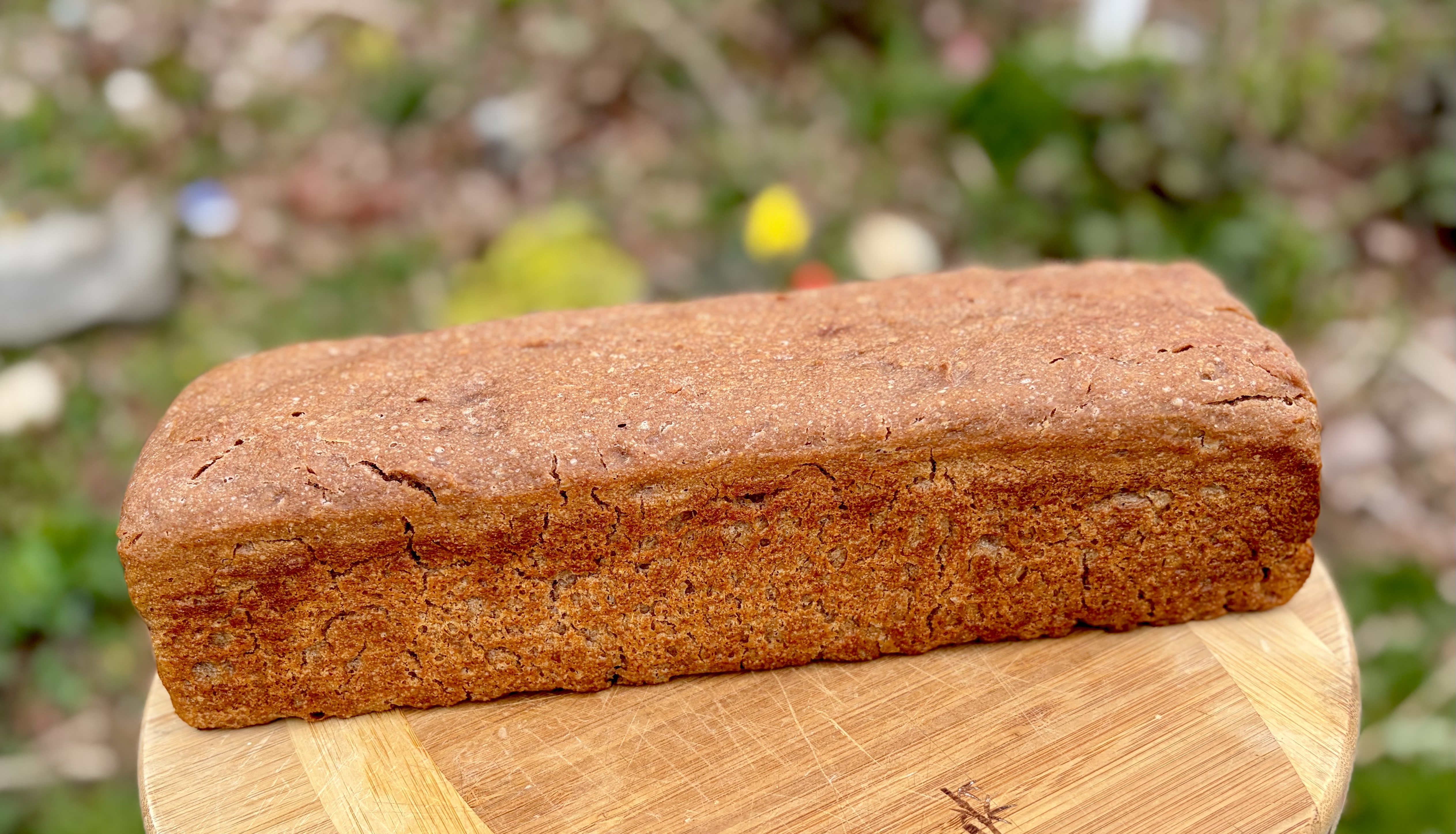
This bake was based on a previous formula, which used white mashed potatoes and spelt flour. I changed this up a bit, using Danko Rye and Marquis Wheat from Barton Spring Mills, and substituted half the flour in the scald with fresh milled Hopi Blue Corn.
Last time I baked this as a free-standing loaf, but since the dough seemed even more hydrated than the previous bake, I used my large Pullman pan instead. The overall hydration, including the roasted sweet potatoes, honey, and scald, comes in at a nice 106.68%.
I followed along with the same procedure I’ve been using to try to achieve maximum gluten development. I did 2 sets of coil folds, 30 minutes apart during bulk, and one set of stretch and folds. I let this go to a 50% rise before shaping and placing in the Pullman pan. I used my dough scraper to help shape the loaf and move it into the pan since this was a very sticky dough from not only the hydration, but the rye as well.
The Marquis wheat was milled with my Mockmill 200 and sifted once with a #30 drum sieve, and re-milled at the finest setting. The Danko Rye was only milled once at the finest setting and was not sifted. The barley and Hopi Blue Corn for the scald flour were milled only once at the finest setting.
The total amount of fresh milled flour in this bake was 83.5%. I sifted 3% of the bran from the whole wheat. If the sifted bran bothers you, just add it back when you make the scald.
I used my Ankarsrum to mix the dough.
I added a little honey, which really brought out the malty flavor of the barley.
The white sweet potatoes were roasted until nice and soft and mashed up before adding to the dough. Note, this variety of sweet potato is not actually very sweet and tastes completely different than the typical orange variety. It does contain around 75% water, which is a little less than the orange variety as well.
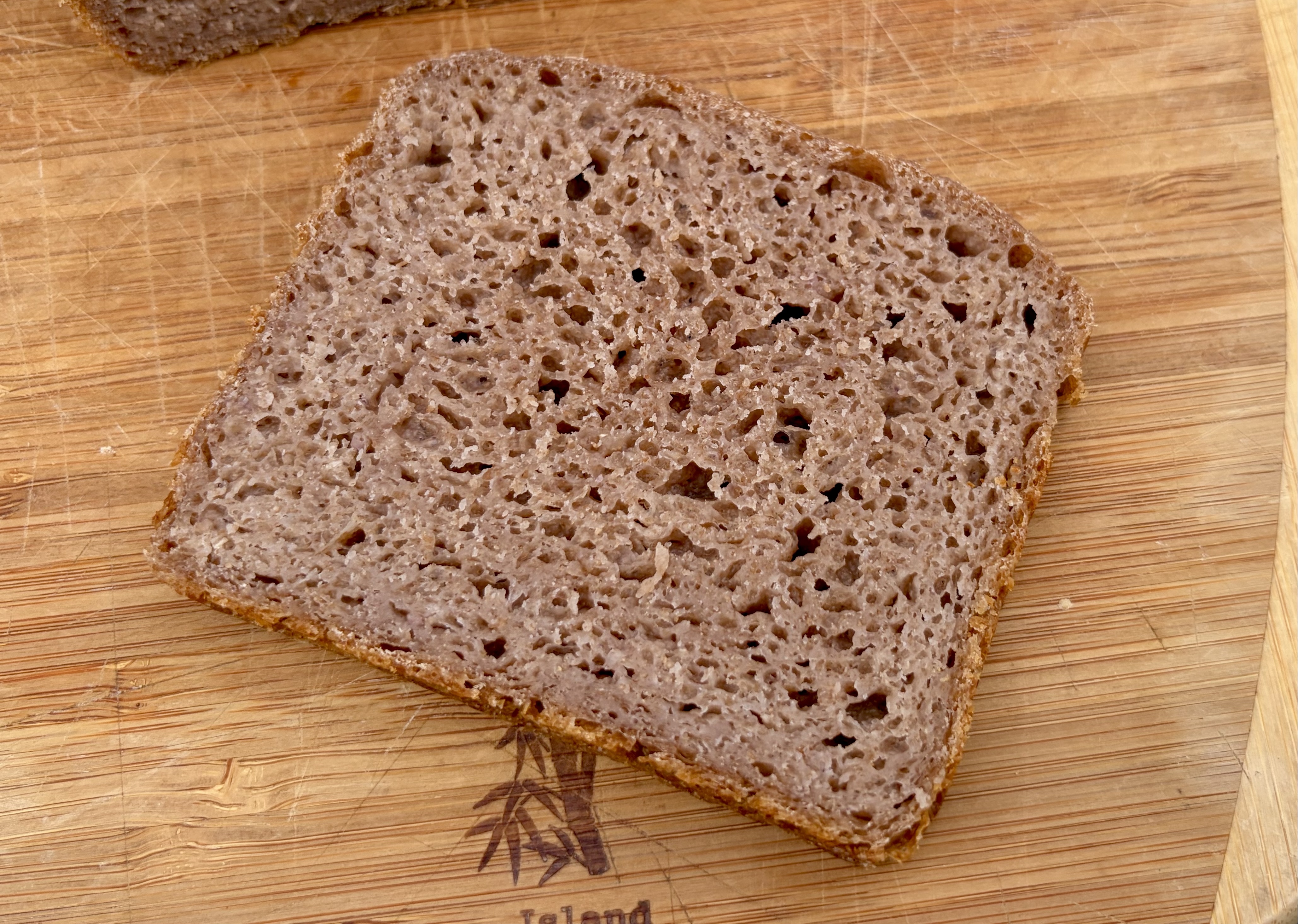
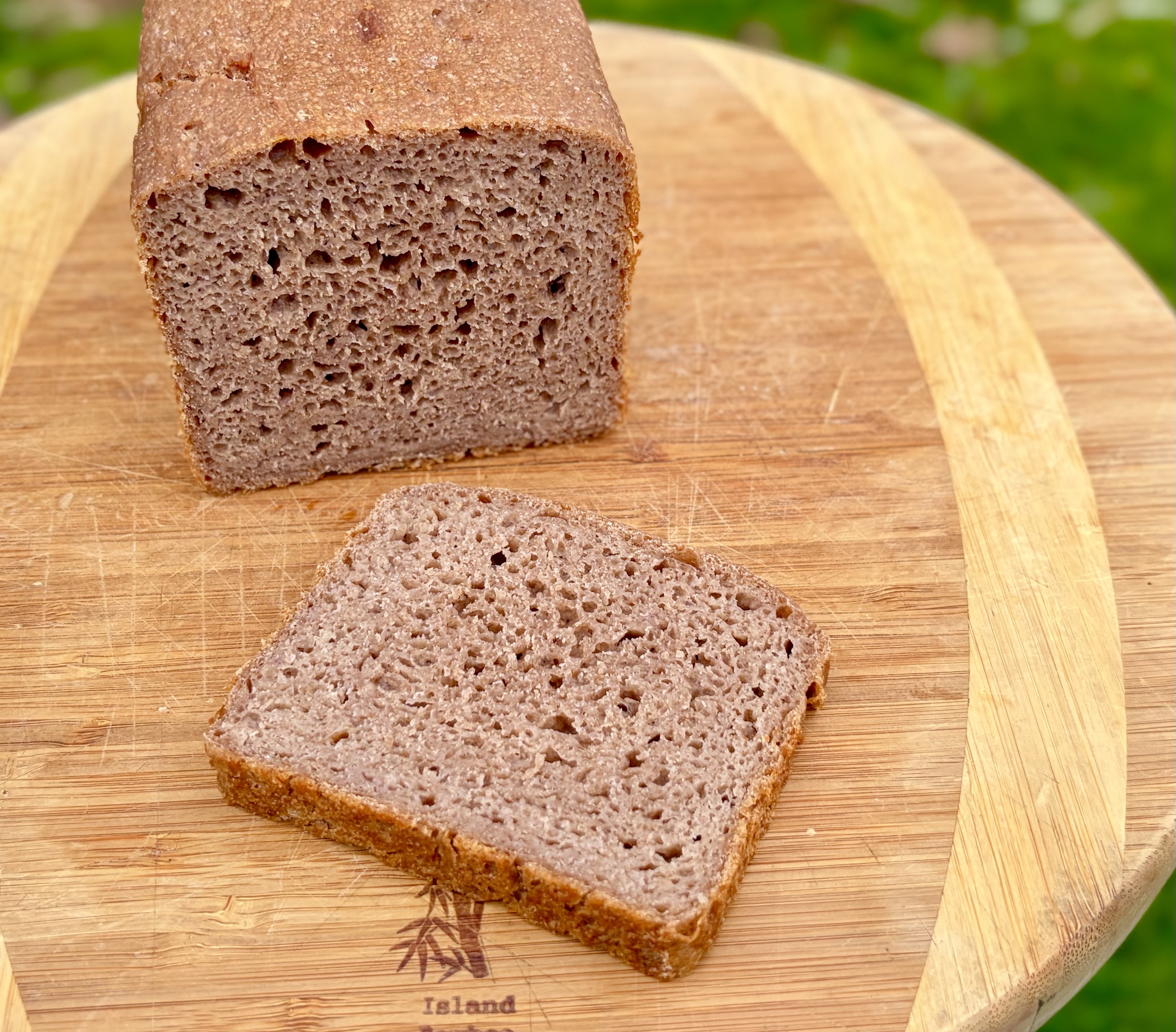
Overall, this bake turned out excellent. The crumb was nice and moist and very open. It was a very flavorful bread.
Formula
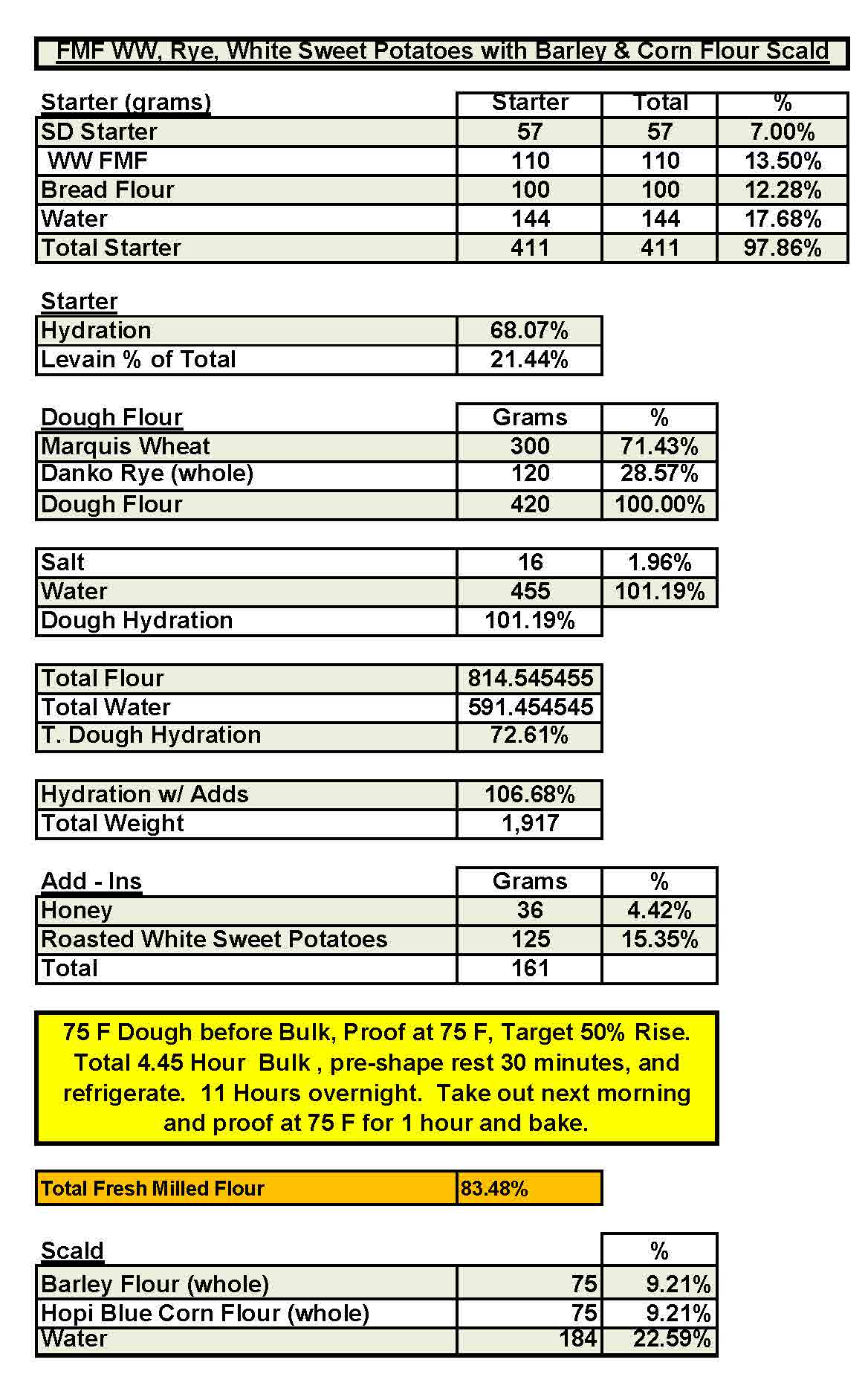
Levain Directions
Mix all the levain ingredients together for about 1 minute and cover with plastic wrap.
Let it sit at room temperature for around 6-7 hours or until the starter has almost doubled. Either use in the main dough immediately or refrigerate for a few hours before using.
Scald Directions
Pour boiling water over the ingredients and mix until incorporated. Cover and let cool to room temperature. I put mine in the refrigerator to let it cool quicker.
Main Dough Procedure
Note: I use an Ankarsrum Mixer, so my order of mixing is slightly different from that of using a Kitchenaid or other mixer. Add all the water to your mixing bowl except the 70 grams of water. Add all your flour to the bowl and mix on low for a minute until it forms a shaggy mass. Cover the mixing bowl and let it rest for 20 – 30 minutes. Next, add about half of the remaining water, honey, and the scald and mix for a minute. Add the levain next and mix for 10 minutes, increasing the speed to position #4. Let the dough rest for 15-20 minutes and then add the remaining water, sweet potatoes, salt, and mix on medium (about speed 4) for around 14-17 minutes until you have a nicely developed, smooth dough. If necessary, mix longer. You want to have good gluten development from mixing the dough.
Remove the dough from your bowl and place it in a lightly oiled bowl, and do several stretch and folds. Make sure the dough is as flat as possible in your bowl/container, and measure the dough in millimeters and take the temperature of the dough as well. Based on the chart from http://www.thesourdoughjourney.com, determine what % rise you need and make a note. If you have a proofer, decide what temperature you want to set it at and what rise you are aiming for. I had a DT of 75 F and set my proofer to 75 F and aimed for a 50% rise. The more experienced you get, the better you will be at knowing how far you can push your bulk proofing. I pushed this one to around 55% rise. Do 2 sets of coil folds, 30 minutes apart. After another 30 minutes, do a set of stretch and folds.
Once the dough reaches the desired bulk rise, put some cooking spray or water on your prep surface and, using a dough scraper, shape the dough into a log. Immediately place it in your baking pan and cover. Let it rise overnight in the refrigerator for around 11-14 hours. I would not go any longer, or you will risk having the dough get too sour. With so much fresh milled flour and the rye, it’s better to be safe than sorry.
On baking day, while you preheat your oven, take the dough out of the refrigerator, and let it sit at room temperature for 30-45 minutes.
When you are ready to bake, an hour beforehand, preheat your oven to 395°F. Bake for 25 minutes with the cover on and then remove and bake for another 20-25 minutes until the internal temperature hits 210F.
Take the bread out of the oven when done, remove it from the pan, and let it cool on a baker’s rack for as long as you can resist.