
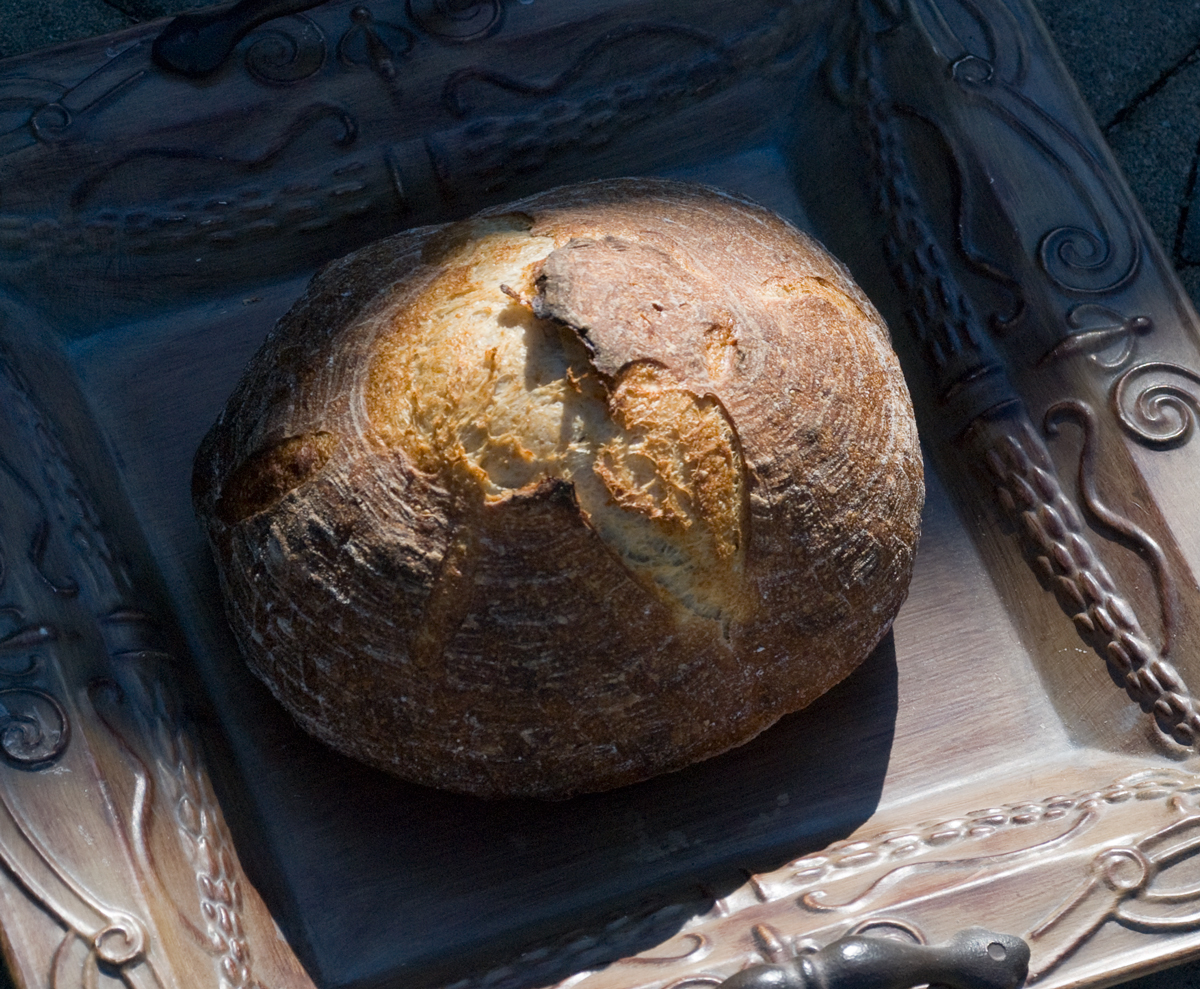
 One of my good baking friends from “Brot & Bread” and The Fresh Loaf posted her version of the Plotziade challenge which is to use the same exact %’s of flour and salt to build a bread. The kicker is you can use yeast, a starter, biga, etc. and any hydration you would like. You can see Karin’s amazing bread here, Below is some more information I borrowed form Karin’s post (I hope she won’t sue me for plagiarism :))
Plötzblog is one of Germany’s best bread baking blogs. Lutz Geißler (author of “Brot backen”) invited all to his blog-experiment: “Wir bauen uns ein Brot” (Let’s build a bread).

Each participant has to bake a loaf, roll or small bread with these ingredients and these amounts:
- 450 g (90%) wheat flour Typ 550 (or bread flour)
- 50 g (10%) whole rye flour
- 10 g (2%) salt
- sourdough and/or yeast
- water
And that’s it: nothing else should be added.
But there are no restrictions on how to make your bread – method, level of hydration and leaven are entirely up to you.
I decided to do a pretty high percentage hydration loaf with a starter using both bread flour and rye flour.
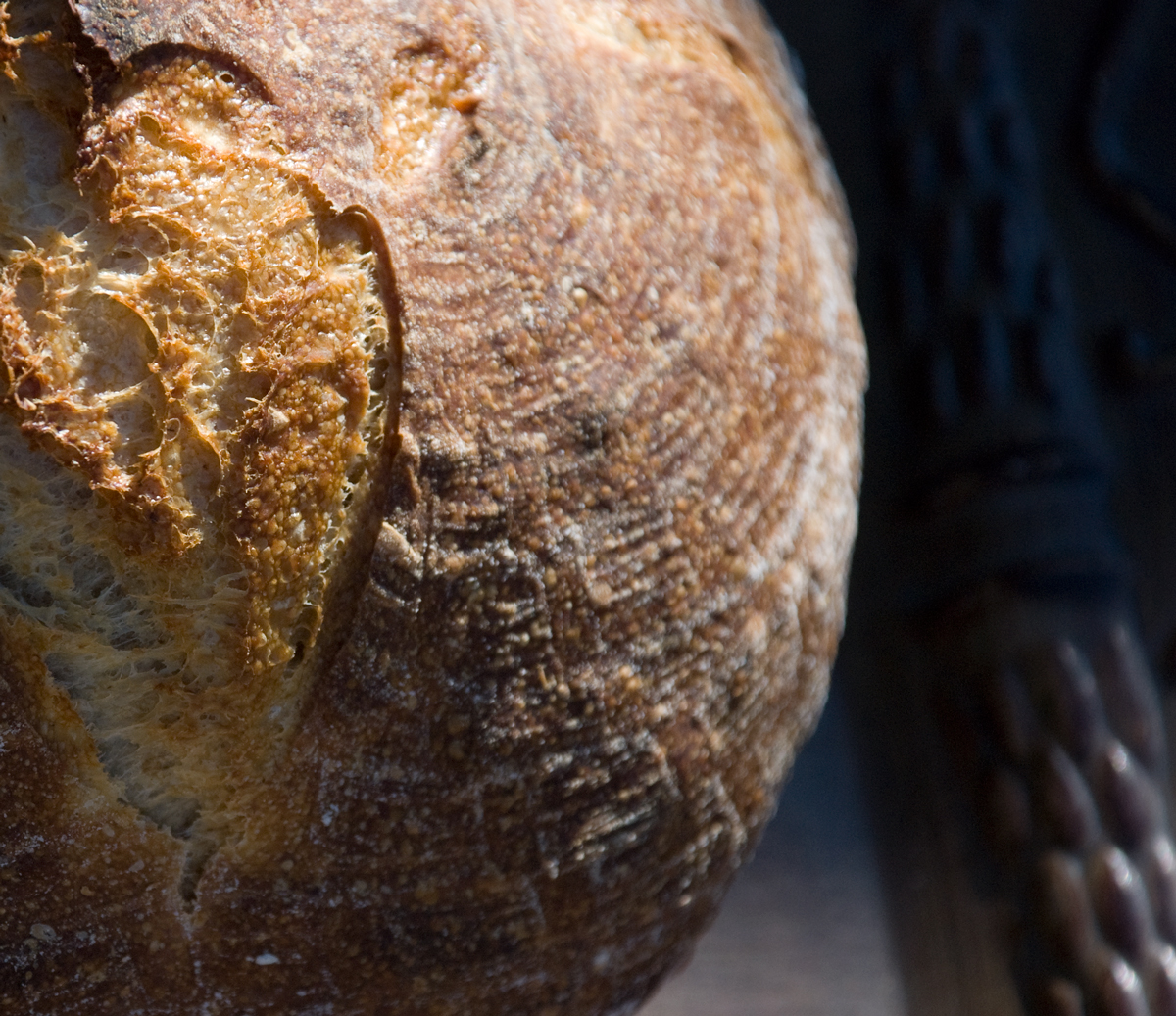
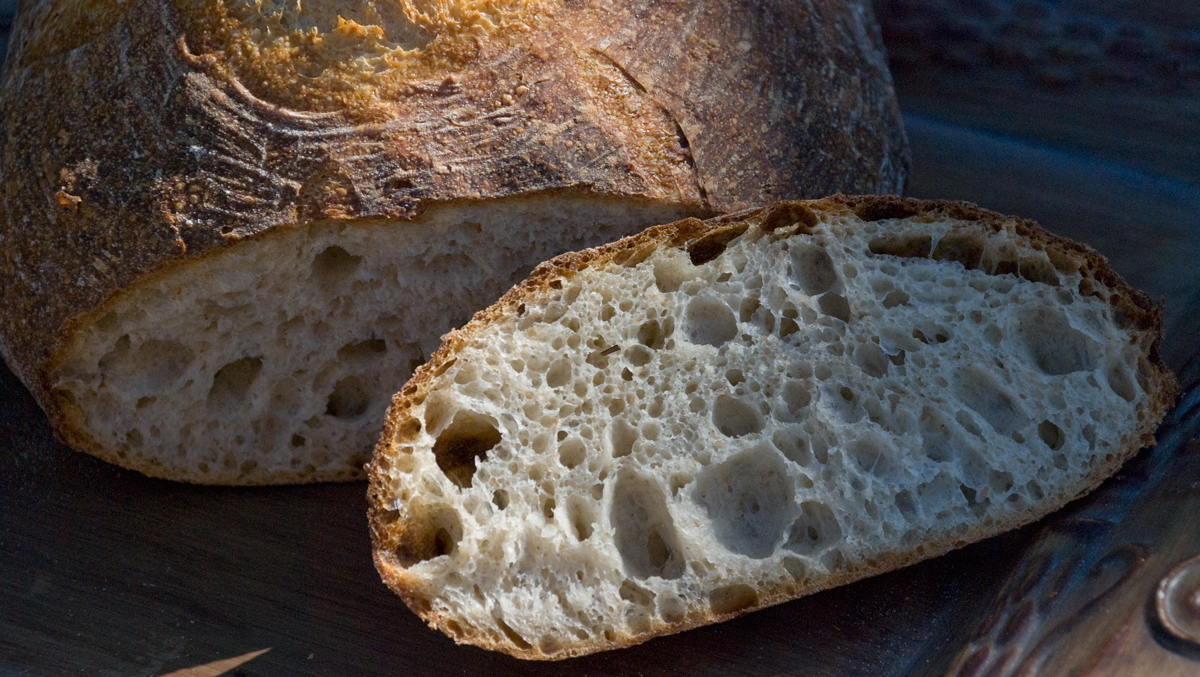
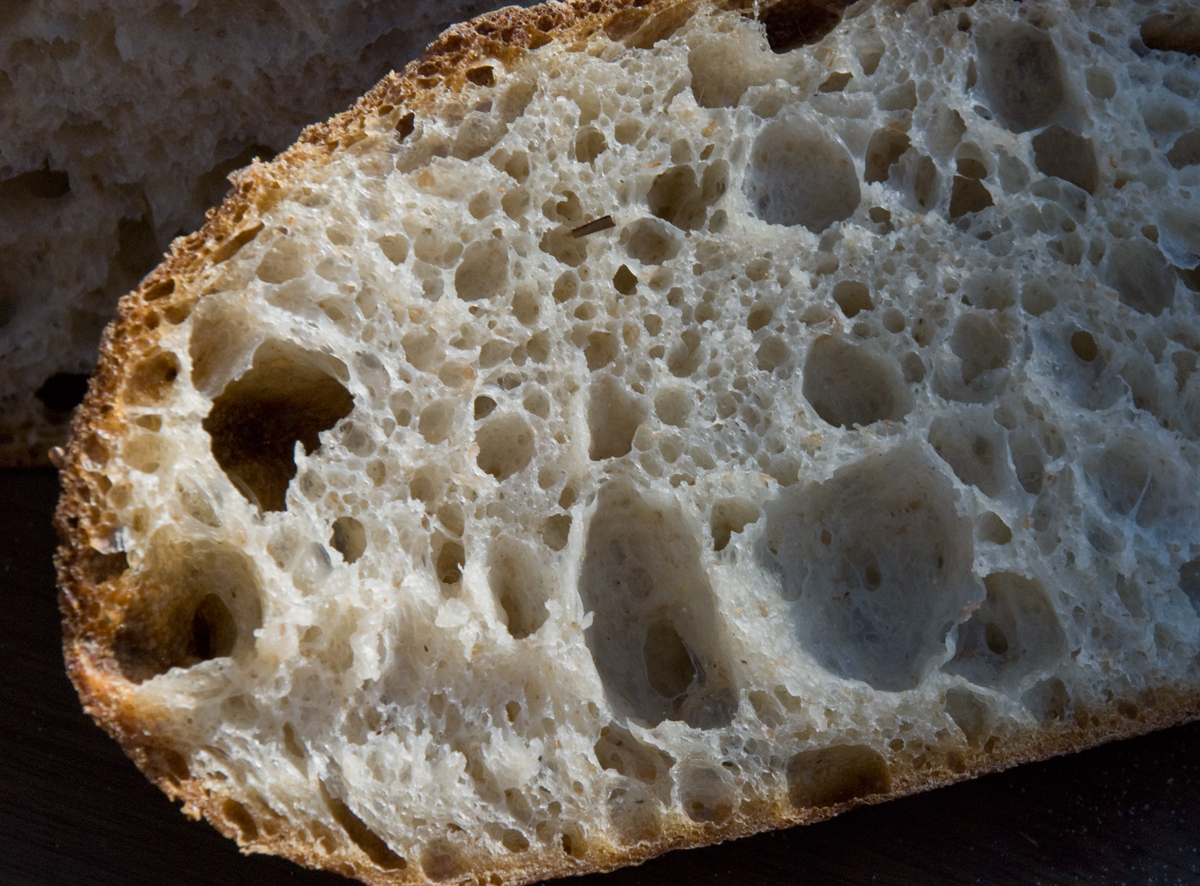
The final loaf came out great. It’s a nice soft bread with a perfect crust and a crumb that has enough holes in it to make you wear a bib when eating a slice with just about anything! The small amount of rye really adds a nice nutty flavor along with the moderate sour tang from the starter and overnight bulk retardation.
I built the starter up in 2 stages starting off with my AP 66% hydration mother starter.

Below is the BreadStorm .bun file.
https://www.dropbox.com/s/z0s90nzvnixr008/Plotziade%20Challenge%20Bread.bun.zip


Levain Directions
Step 1
Mix all the levain ingredients together for about 1 minute and cover with plastic wrap. Let it sit at room temperature for around 7-8 hours or until the starter has doubled. I used my proofer set at 83 degrees and it took about 4 hours.
Step 2
Mix the flour and water with all of the levain from step 1 and let it sit at room temperature again until it is doubled. At this point you can either use it right away or put it in the refrigerator and use it the next 1 to 2 days.
Main Dough Procedure
Mix the flours with the main dough water for about 1 minute. Let the rough dough sit for about 20 minutes to an hour. Next add the levain and salt and mix on low for 4 minutes and speed #2 for another 2 minutes or by hand for about 6 minutes. You should end up with a cohesive dough that is slightly tacky but very manageable. Remove the dough from your bowl and place it in a lightly oiled bowl or work surface and do several stretch and folds. Let it rest covered for 10-15 minutes and then do another stretch and fold. Let it rest another 10-15 minutes and do one additional stretch and fold. After a total of 2 hours place your covered bowl in the refrigerator and let it rest for 12 to 24 hours. (Since I used my proofer I only let the dough sit out for 1.5 hours before refrigerating).
When you are ready to bake remove the bowl from the refrigerator and let it set out at room temperature still covered for 1.5 to 2 hours. Remove the dough and shape as desired.
The dough will take 1.5 to 2 hours depending on your room temperature and will only rise about 1/3 it’s size at most. Let the dough dictate when it is read to bake not the clock.
Around 45 minutes before ready to bake, pre-heat your oven to 550 degrees F. and prepare it for steam. I have a heavy-duty baking pan on the bottom rack of my oven with 1 baking stone on above the pan and one on the top shelf. I pour 1 cup of boiling water in the pan right after I place the dough in the oven.
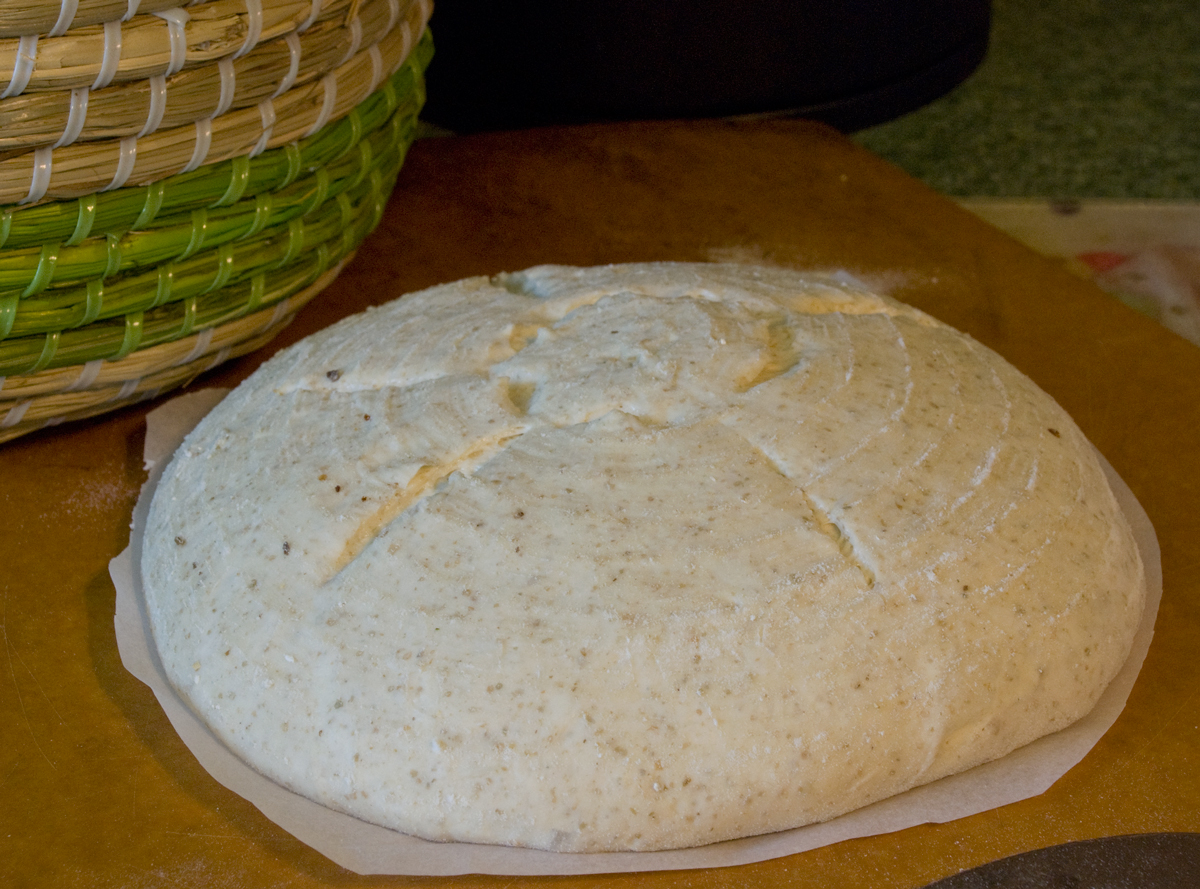
Right before you are ready to put them in the oven, score as desired and then add 1 cup of boiling water to your steam pan or follow your own steam procedure.
After 5 minute lower the temperature to 450 degrees. Bake for 35-50 minutes until the crust is nice and brown and the internal temperature of the bread is 205 degrees.
Take the bread out of the oven when done and let it cool on a bakers rack before for at least 2 hours before eating.
This post has been submitted to the Yeast Spotting Site here: http://www.wildyeastblog.com/category/yeastspotting/.

 mookielovesbread
Your bread is really wonderful! Nice to meet you by “International 1. Plötziade” it is a very exiting experiment…
Have a nice day!
Cheriechen
Holey cow! That is an airy crumb if I ever saw one! I’ll have to try your version, especially since it is baked without a Dutch oven. Good job!
Thanks Karin for inviting me to play :). This was fun and I really like the way the bread turned out. Let me know if you try it. Just remember to use wet hands when shaping.
Regards,
Ian
After baking all those Forkish Breads, I am much more comfortable with high hydrated loaves.
Did you send Lutz your link? I just checked his Plötziade post with all those comments and links, but didn’t see yours.
I sent it to him and he confirmed he received it so maybe he will put it up soon.
I would, nevertheless, add a link directly as a comment to the Plötziade post. A lot of people follow those links right away, I checked them all out, too. And most Germans speak English well enough. Everybody is happy when someone visits and comments.
Can you, please, add a download link for the BreadStorm formula? (In case you don’t know how this works, I can tell you.)
I will try and do that tomorrow or I can email you the formula if I can’t figure it out.
Putting it up now.
I can’t seem to get it to accept the bun file.
Any help would be appreciated.
Did you compress it? Look, this was what Jacqueline Colussi mailed me:
Export a .bun file from BreadStorm.
Zip the .bun file. (To do this, open Finder, and locate the .bun file you just exported. While holding down the “control” button on your keyboard, click this .bun file. Then select “Compress [name of formula].bun.”) Zipping ensures that individuals downloading the .zip file will be able to open the .bun file with BreadStorm on both Mac and iPhone (the latter of which only beta testers have right now, but more people will have shortly).
Copy the zip file to the “Public” folder inside your “Dropbox” folder.
In Dropbox, hold down the “control” button on your keyboard, click the .bun file, then click “Copy Public Link.”
Add this hyperlink to your blog post.
When your readers click on the hyperlink, they’ll automatically download the zipped .bun file, which they can double-click to unzip, then import into BreadStorm.
Took a while for me to figure that out, too 🙂
What a pain. It didn’t work exactly like your instructions. I don’t have a Public folder in dropbox for some reason.
It seems to work but it looks ugly.
Thanks! I am brain dead! Should have known it zip the file. Will play with this tonight or tomorrow morning.