
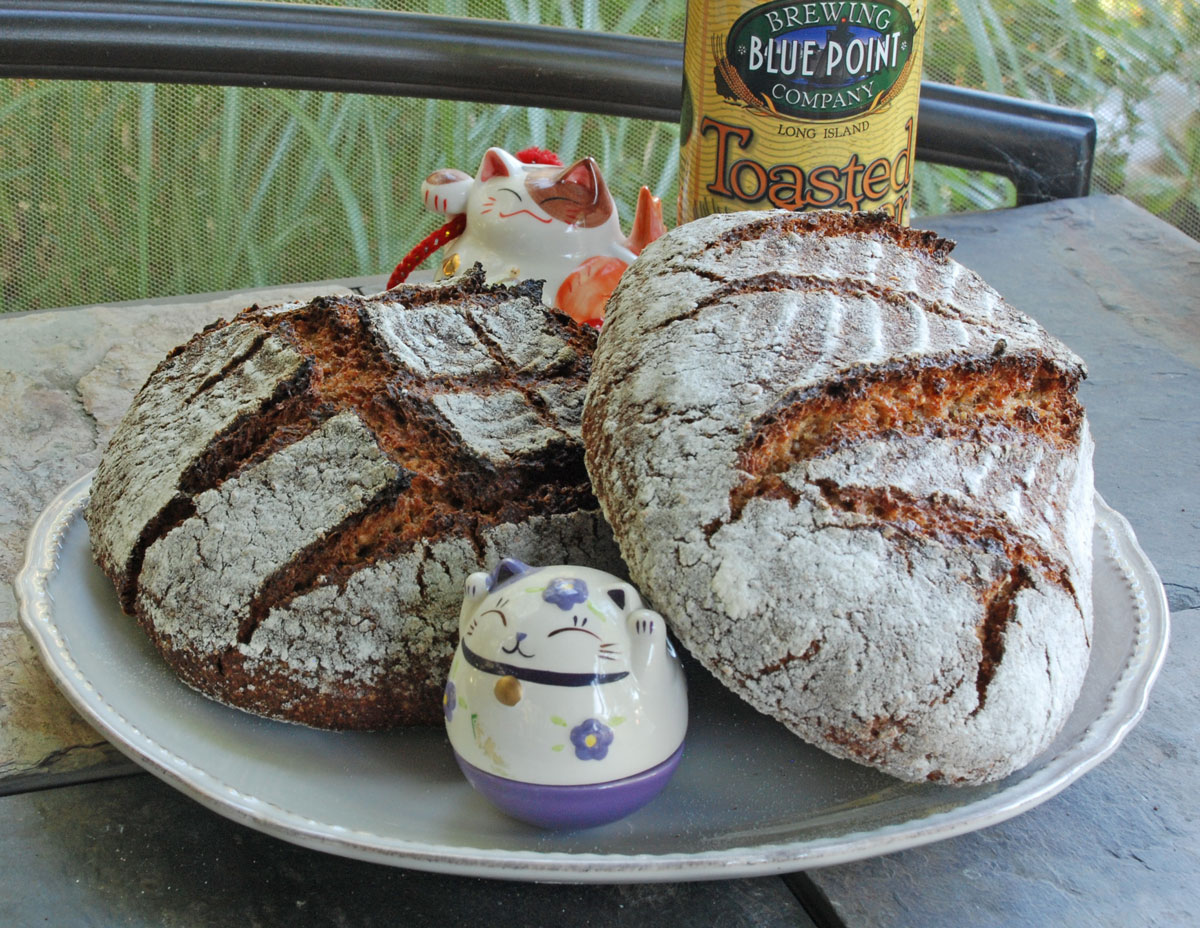
 I decided to make a couple of breads to bring to my cousin’s house for Rosh Hashana this weekend and she requested I make my Farro Hard Cider Multi-grain. I didn’t have any hard cider available nor did I have time to make a Farro starter so I used a nice Long Island toasted lager and substituted my stock AP starter which I recently refreshed.
I also ground some soft white wheat berries I just purchased at the store from Bob’s Red Mill. The package says this is similar to a pastry flour and it did seem to make a very soft flour.
For the soaker I added some rolled oats in addition to the cracked wheat I used last time.
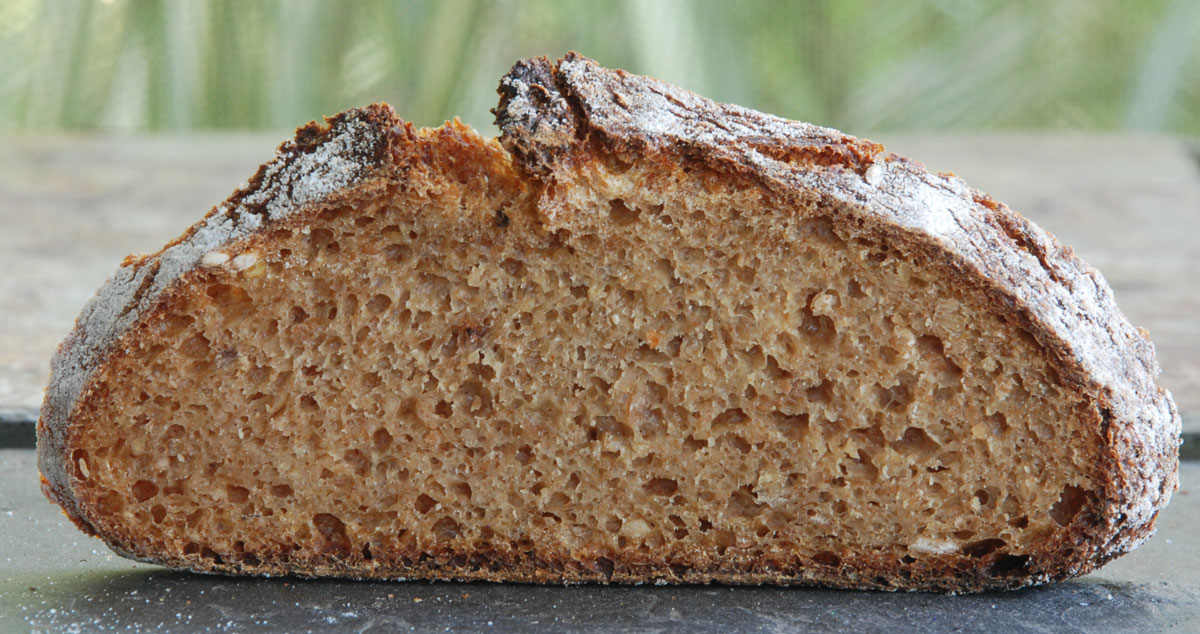
I have to say the second version of this bread is definitely better than the first try.
This is a nice hearty bread great with some cheese or stew or for a nice pastrami or corned beef sandwich.
AP Starter
227 grams AP Flour
71 grams AP Seed Starter
151 grams Water at Room Temperature (80-90 degrees F.)
Mix ingredients in a bowl until thoroughly combined. Cover the bowl and let it sit at room temperature for around 8 hours. The starter should almost double when ready to proceed. You can either mix in final dough or put in refrigerator for at most 1 day before using. If your kitchen is warmer than mine which is usually about 70-72 degrees with my air-conditioning you can proceed sooner.
Soaker
60 grams Cracked Wheat
40 grams Rolled Oats
280 grams Boiling Water
Mix ingredients together in a bowl and cover. Let rest for 30 minutes or longer until ready to use.
Drain the liquid before mixing in the final dough.
Main Dough Ingredients
425 grams Refreshed AP Starter (65% hydration) from above
100 grams Soaker from above
90 grams Freshly Milled Farro Flour
80 grams Quinoa Flour
75 grams Wheat Germ
21 grams Potato Flour
65 grams AP Flour
55 grams First Clear Flour (KAF Brand)
120 grams Freshly Ground Soft Wheat Flour
60 grams Pumpernickel Flour (Dark Rye or Course Rye Flour)
50 grams Molasses
16 grams Sea Salt or Table Salt
445 grams Toasted Lager
Procedure
Mix the flours with the Lager and molasses in your mixer or by hand for 1 minute. Next cut the starter into small pieces and put in bowl and mix for 1 minute to incorporate all the ingredients. Let the dough autolyse for 20 minutes to an hour in your bowl and make sure to cover it. Next add in the salt, and the soaker and mix on speed #1 for 3 minutes or by hand and on speed #2 for 2 minutes. The dough should have come together in a ball and be tacky but not too sticky.
Next take the dough out of the bowl and place it on your work surface. Do a stretch and fold and rest the dough uncovered for 10 minutes. After the rest do another stretch and fold and cover the dough and let it rest for 10 minutes. Do one more stretch and fold and put the dough into a lightly oiled bowl and let it sit at room temperature covered for 2 hours. After 2 hours you can put the dough into the refrigerator for 24 hours or up to 2 days before baking. Feel free to do some additional S & F’s if you feel it is necessary. I baked the bread about 24 hours later.
The next day (or when ready to bake) let the dough sit out at room temperature for 1.5 – 2 hours.

Next, form the dough into your desired shape and put them in floured bannetons, bowls or on a baking sheet and let them rise covered for 2 hours or until they pass the poke test. Score the loaves as desired and prepare your oven for baking with steam.

Set your oven for 500 degrees F. at least 30 minutes before ready to bake. When ready to bake place the loaves into your on your oven stone with steam and lower the temperature immediately to 450 degrees. The total baking time was around 45 minutes. When both loaves are golden brown and reached an internal temperature of 200 degrees F. you can remove them from the oven.
Let the loaves cool down for at least an 6 hours or so before eating as desired.


This post has been submitted to the Yeast Spotting Site here: http://www.wildyeastblog.com/category/yeastspotting/.

 mookielovesbread