
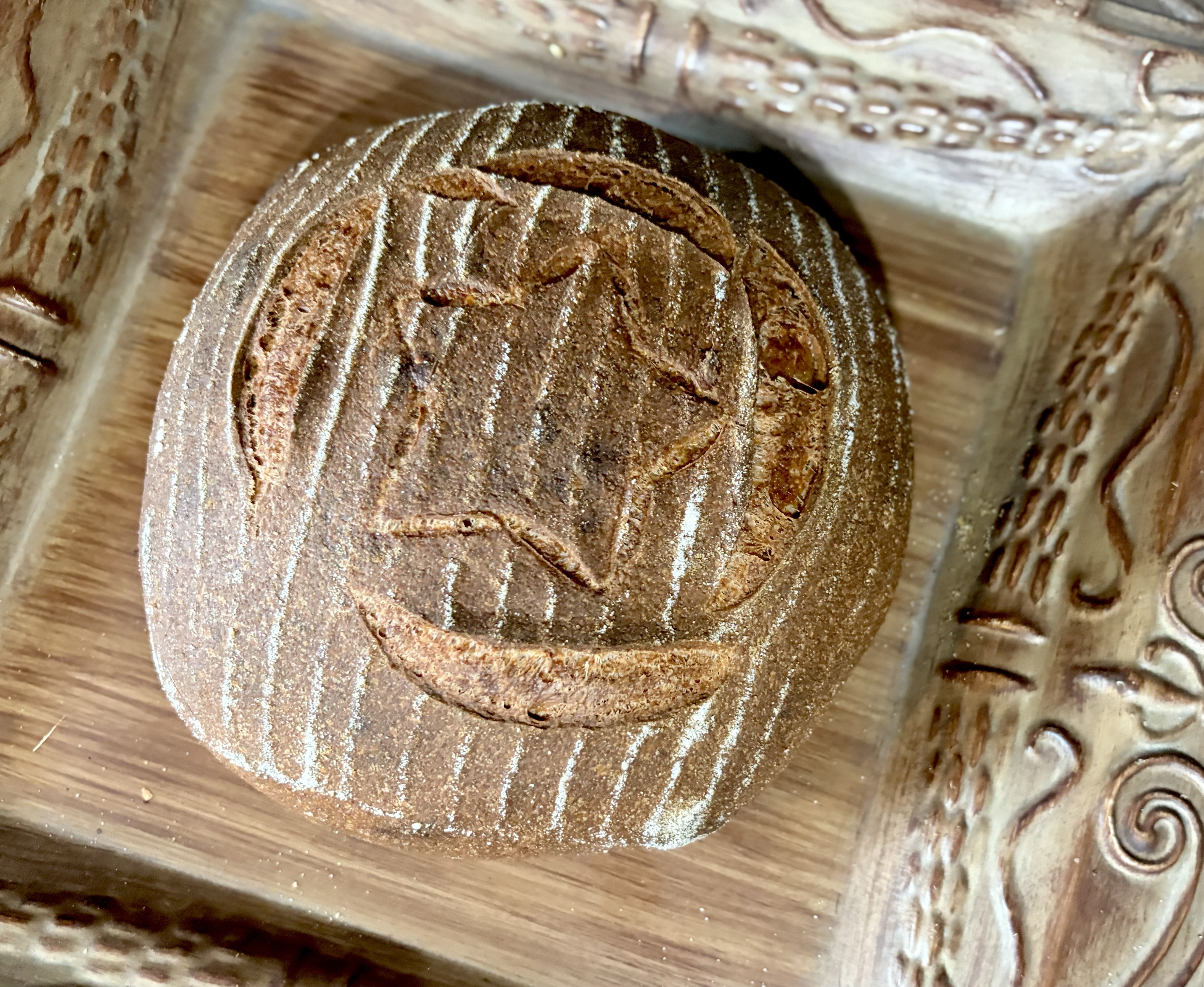
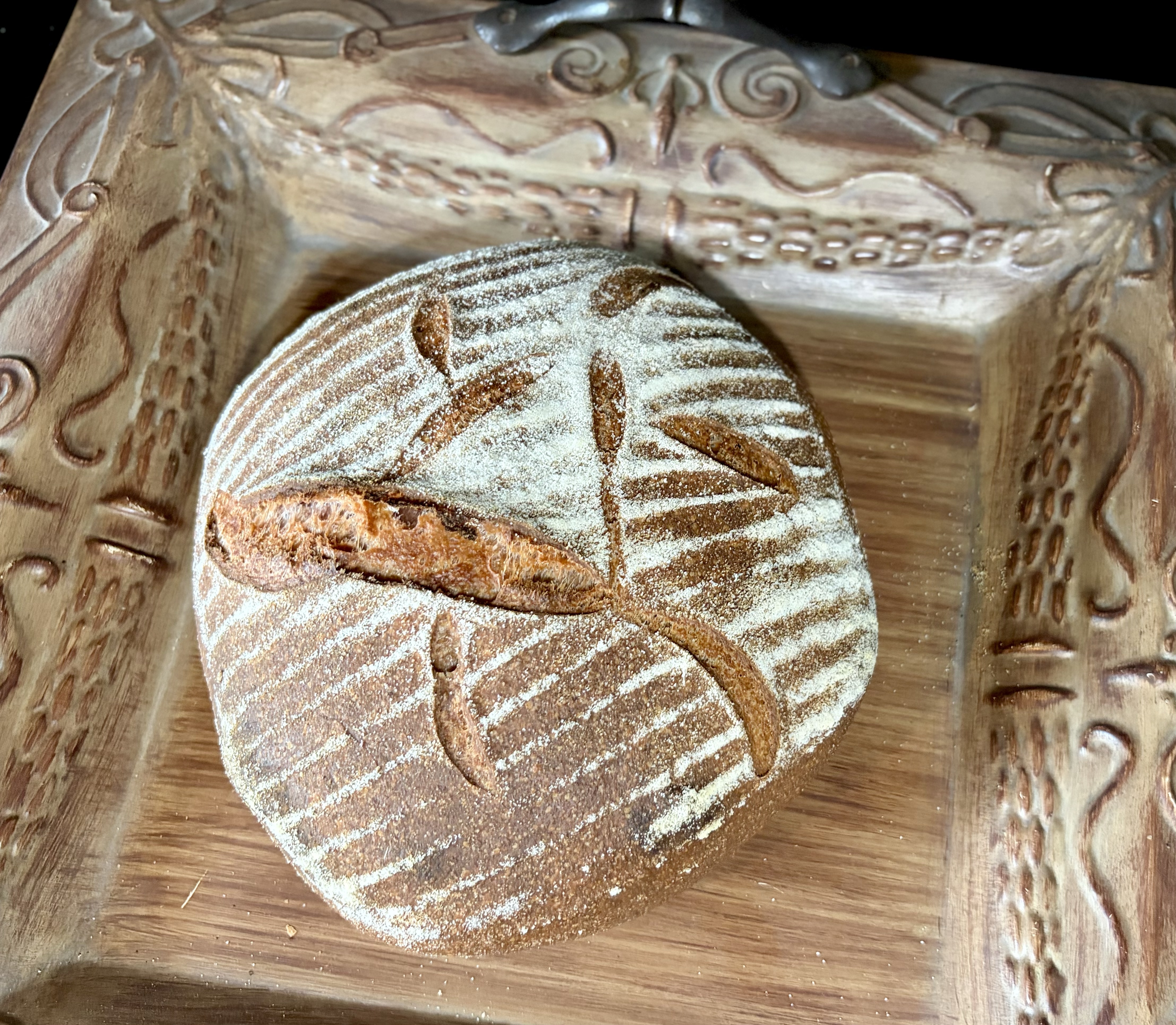
Made with roasted sweet potatoes, fresh milled durum, fresh milled Blue Hopi corn flour and King Arthur bread flour.
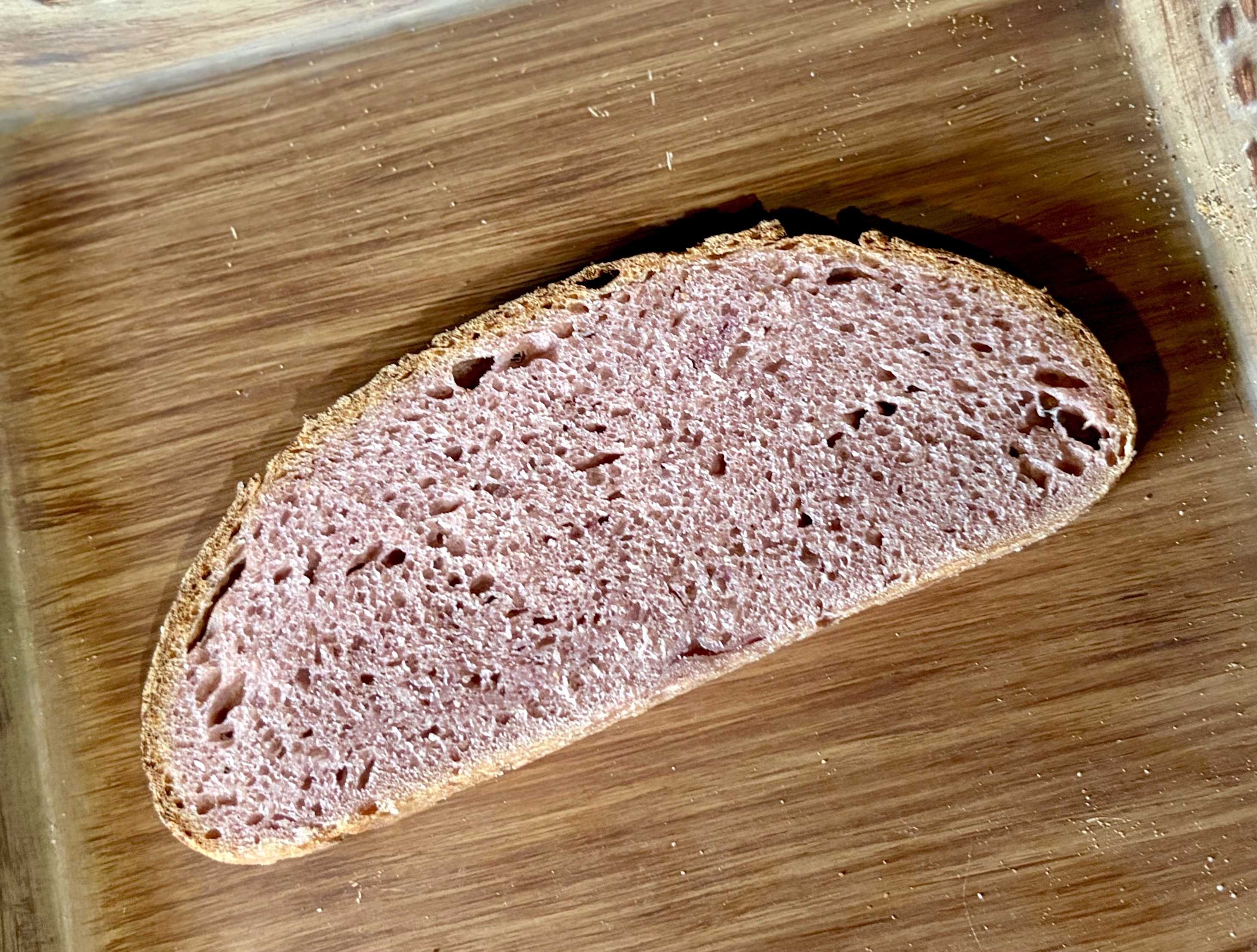
I was happy with the nice purple flavor.
I usually have a higher % of fresh milled than this bake, so I was expecting a more open crumb. I’m so afraid of over-Fermentation using FMF that I could have pushed bulk to 75-85% easily and achieved a more open crumb.
Either way, it’s a flavorful bake.
I roasted the purple sweet potatoes until they were nice and soft and let them cool completely before removing them from their skins.
Durum wheat was milled with my Mockmill 200 and sifted with a #30 drum sieve. I then re-milled at the finest setting and sifted once more with a #40 drum sieve.
I also milled some Hopi Blue corn and sifted once with a #30 and re-milled again at the finest setting.
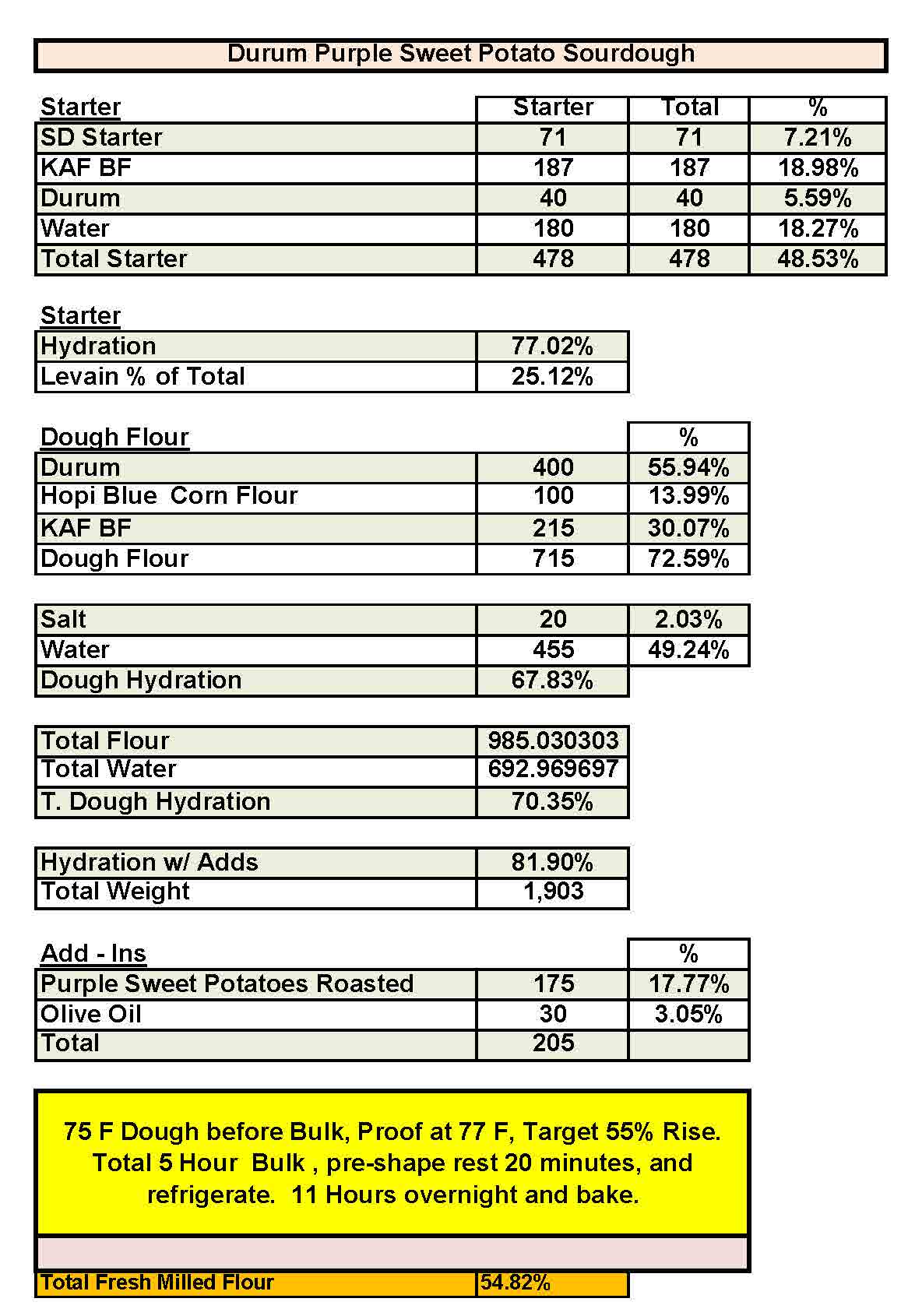
Formula
Levain Directions
Mix all the levain ingredients together for about 1 minute and cover with plastic wrap.
Let it sit at room temperature (I used my proofer set at 75°F) for around 5-7 hours or until the starter has almost doubled. I like to use the starter as soon as it has peaked. You can refrigerate it and use it later or the next day, but it may lose some of its strenght if not used right away.
Main Dough Procedure
Note: I use an Ankarsrum Mixer, so my mixing order is slightly different from that of a KitchenAid or other mixer. Add all the water to your mixing bowl except for about 1/4 of the water. Add all the flour to the bowl and mix on low for 1 minute, until it forms a shaggy mass. Cover the mixing bowl and let it rest for 20 minutes. Next, add the levain, salt, sweet potatoes, olive oil, and the remaining water (as needed), and mix on medium-low speed (about speed 4) for around 15-20 minutes, until you have a nicely developed, smooth dough. Don’t be afraid to mix longer. I have found that upfront gluten development is key if you want a nice open crumb.
Remove the dough from the bowl and place it in a lightly oiled bowl, and do several stretch and folds. Make sure the dough is as flat as possible in your bowl/container, and measure the dough in millimeters and take the temperature of the dough. Based on the chart from http://www.thesourdoughjourney.com, determine what % rise you need and make a note. If you have a proofer, decide what temperature you want to set it at and what rise you are aiming for.
Do a set of coil folds after 30 minutes, and a second one 30 minutes later, and one additional one 30 minutes later only if needed. It’s important to build the layers of gases by doing the coil folds.
Once the dough reaches the desired bulk rise, pre-shape and let rest for 15-20 minutes. Finish shaping and place the dough in your banneton, bowl, or on a sheet pan, then cover it to keep it airtight.
When you are ready to bake, preheat your oven to 500°F an hour beforehand and prepare for steam. Let your dough sit at room temperature while the oven is warming up. When ready to bake, score as desired. Prepare your oven for steam. I have a heavy-duty baking pan on the bottom rack of my oven with 1 baking stone above the pan and one on the top shelf. I pour 1 cup of boiling water into the pan right after I place the dough in the oven. I then lower the oven temperature to 450°F and bake until they are nice and brown, and the internal temperature is at least 205 – 210°F.
Take the bread(s) out of the oven when done and let them cool on a baker’s rack for as long as you can resist.

 mookielovesbread
Leave a comment