

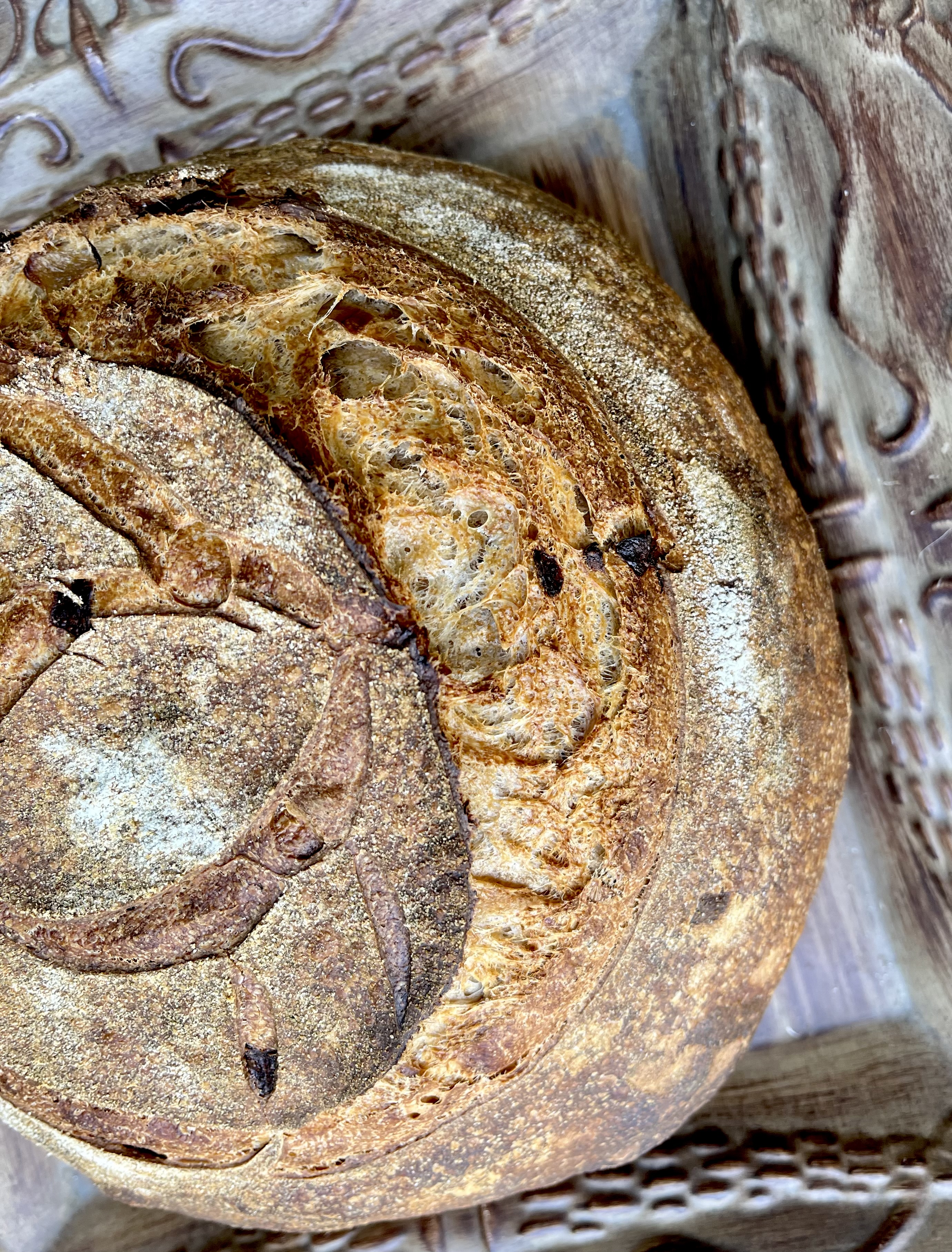
I love adding caramelized onions to bread. I used a combination of fresh-milled Marquis whole wheat from Barton Spring Mills along with some freshly milled spelt and KAF bread flour.
Marquis a cross between Red Fife and Red Calcutta, developed in Canada in 1906. It accounted for 11 million acres of wheat grown in the U.S. by 1919.
This hard red wheat has a similar flavor profile to Red Fife, but is milder, and makes a stronger and most extensible dough. It
It’s a heritage grain grown in Texas, USA.
Sour cream was added for some extra softness along with the sweet caramelized onions.
The dough was mixed using my trusty Ankrusrum and open-baked with steam.
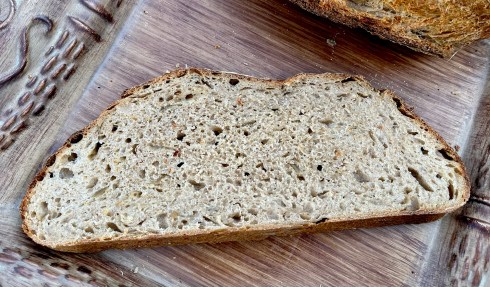
I was very happy with how this came out. The crumb was nice and moist and the onion flavor really came through. This bread made some tasty sandwiches and toast as well.
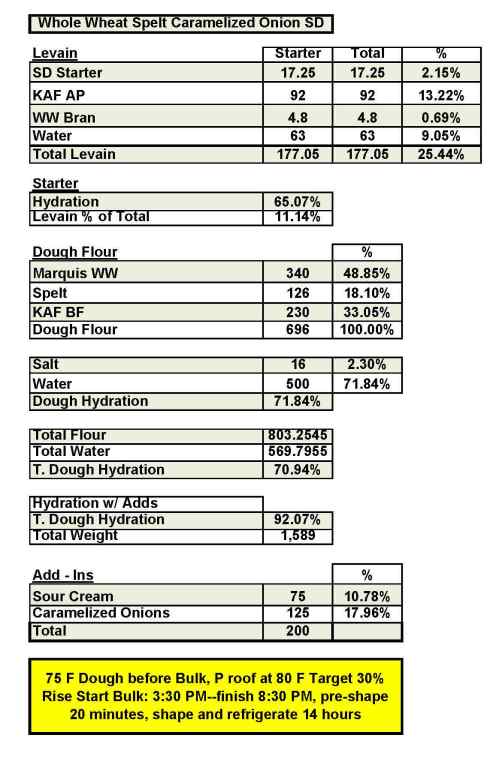
Formula
Levain Directions
Mix all the levain ingredients together for about 1 minute and cover with plastic wrap.
Let it sit at room temperature for around 6-7 hours or until the starter has almost doubled. I used my proofer set at 76 degrees so it took around 5 hours for me. Either use in the main dough immediately or refrigerate for up to 1 day before using.
Caramelized Onions
Cut up a large onion into rings and cook on low in a saute pan in some olive oil stirring occasionally. When the onions are done they should not be burned but soft and caramelized. I like to add a little salt as well. Let them cool completely before using.
Main Dough Procedure
Note: I use an Ankarsrum Mixer so my order of mixing is slightly different than if using a Kitchenaid or other mixer. Add all your liquid to your mixing bowl except 50-80 grams. Add all your flour to the bowl and mix on low for a minute until it forms a shaggy mass. Cover the mixing bowl and let it rest for 20 – 30 minutes. Next add the levain, salt, sour cream, and remaining water as needed and mix on medium-low (about speed 3) for 12- 24 minutes until you have a nice developed dough. Right before you are done mixing add the onions and mix for a minute.
Remove the dough from your bowl and place it in a lightly oiled bowl and do several stretch and folds. Make sure the dough is as flat as possible in your bowl/container and measure the dough in millimeters and take the temperature of the dough as well. Based on the chart from www.thesourdoughjourney.com, determine what % rise you need and make a note. If you have a proofer decide what temperature you want to set it at and what rise you are aiming for. If the dough is fully developed you don’t need to do any stretch and folds, but if it’s not, do several sets 15-20 minutes apart.
Once the dough reaches the desired bulk rise, pre-shape and let rest for 15-20 minutes. Finish shaping place in your banneton, bowl, or on your sheet pan and cover it so it is pretty airtight. You will then place it in your refrigerator so you don’t want the dough to get a crust on it. I usually don’t leave the dough in the refrigerator for more than 12 hours because of all the fresh milled flour but it is possible to go longer. I let this one go 15 hours total and the dough was nicely fermented.
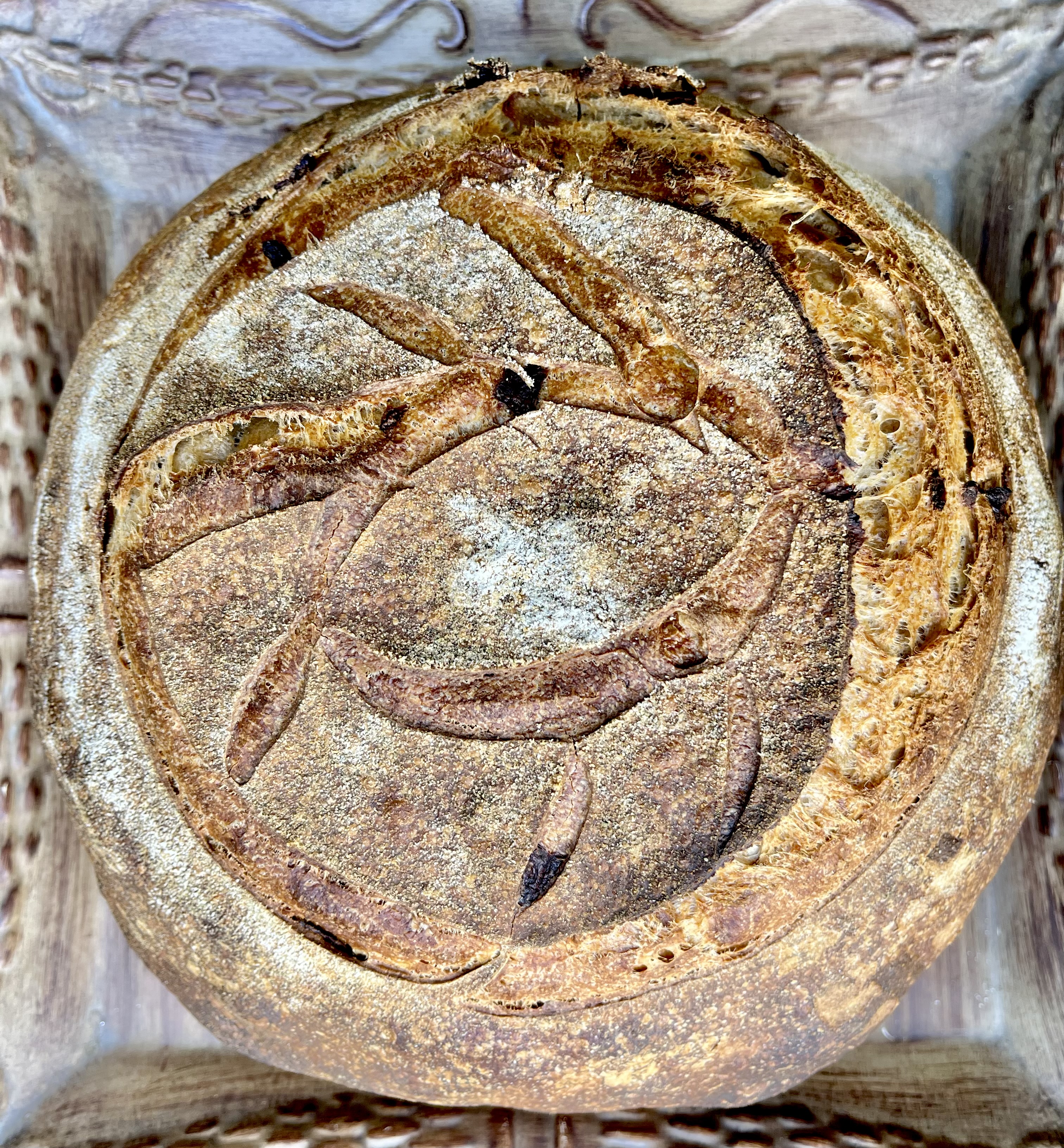
When you are ready to bake, an hour beforehand pre-heat your oven to 540 F and prepare for steam. I have a heavy-duty baking pan on the bottom rack of my oven with 1 baking stone above the pan and one on the top shelf. I pour 1 cup of boiling water into the pan right after I place the dough in the oven. Remove your dough from the refrigerator and score immediately. I used some cookie cutters to jazz it up a bit.
Take the bread(s) out of the oven when done and let them cool on a baker’s rack for as long as you can resist.

 mookielovesbread
Leave a comment